
|
||||||||||||||||||||||||||||||||||||||||||||||||||||||
|
Atrium 60 Outdoor Speakers What a surprise these little gems turned out to be, including giving them a ride with an Onix H6550 integrated tube amplifier. Sorry Paul, I needed to hear these from an analog source too. The Atrium 60 speaker is from a series of all weather speakers from Polk, top of the line in fact. Housed in a sturdy black aluminum case (also available in white and if it must fit in with your décor it can be painted), the speaker is about 13" high, 8" across, and 9 inches deep. It comes with mounting brackets, luckily, because this unit is quite heavy. The Atrium 60 is an 8 ohm speaker with an efficiency of 89 dB. Polk recommends amplification between 10-125 watts, and it has a frequency range from a low 50 Hz to a high 20 kHz. Not unlike many of their current designs for speakers, the Atrium is fitted with a 6 ½" mid/woofer driver; yep the same "mineral-filled polypropylene cone and butyl rubber surround" unit. The highs are handled by a 1" metal coated dome tweeter. Consistent in the design is the patented Polk Power Port on the rear for controlling bass response. If by chance you're mounting the unit in an area where water will definitely cause some concern, the power port can be closed with an included plug. Performance Enclosure
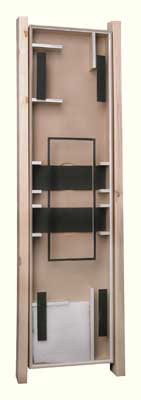
With some minor wood blocking over and below the speaker, a rudimentary speaker "enclosure" can be achieved. I would suggest, however, that spending this kind of money on performance oriented speakers requires a bit more planning. Polk not only recognizes the problem but deals with the issue in a very proactive approach with their engineered Performance Enclosure (PE), an optional enclosure you can purchase with the in-walls. The PE is actually quite a substantial piece of work fabricated from dense MDF. With various baffles and bracing, the end result of the speaker itself is a bit more predictable. Of course, if you're building new construction, installing the PE is easy, but if you're retrofitting and just cutting out some drywall, well it is a little more difficult. The PE will run you about $250 each from Polk. NetStreams NetStream's DigiLinX audio distribution system is an integral part of this package and should be mentioned. Absolutely a must is the NetStreams SN1000 IP card, and you'll need one ($400) per pair of speakers.
The size of your system can be small, such as a pair of speakers, to quite large multiple touchpad locations. I don't mean to suggest its limitations to only touch pads. Any component with an IP address, such as PCs, PDAs, etc. can be used to control the system. What is most important however is NetStreams' commitment to the highest quality sound. For example uncompressed *.wav files up to 24-bit/96kHz can be distributed throughout the system. Included for me was the 4" LCD touch screen device from NetStreams, the TL380. It controls source, location, music selection, volume control, etc. It can also be programmed to control lighting and other appliances – security cameras for example. ReQuest Music Server The third component to the system is the server itself, and Polk integrated the ReQuest Music server. The unit Polk Audio used in this setup is the F Series™ from ReQuest. Although it has a touch screen, it's likely the unit wouldn't be anywhere near easy access, most likely in an A/V closet. It's rather a shame, since the unit is very attractive. All black, save a centered silver logo plate. The unit can handle two zones, yet a four-zone server is available.
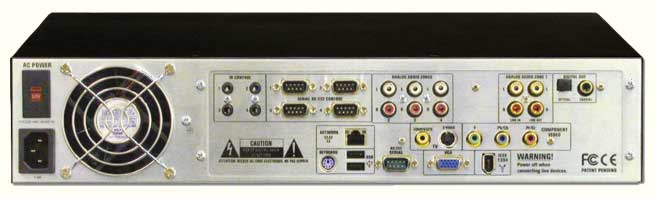
What it appears to be is a modified CD player. It's supplied with an extensive remote control almost like a miniature keyboard. Why? Because when it's encoding CDs, it recognizes 90%, the remaining CDs you'll have to manually input the album and song titles. If you're too lazy to do that, it will just enter the information as Artist 01 and song titles the same. A USB port on both the front and rear will allow a wireless keyboard. The ReQuest can "serve" up lossless *.wav files, along with MP3 and FLAC recordings – hundreds and even thousands of them in fact depending on the unit you choose, CDs that is. This chart was taken from their website.
|
||||||||||||||||||||||||||||||||||||||||||||||||||||||
 Not to
beat the subject to death once again, but the
inherent criticism of in-walls is controlling bass.
Obviously placing open
drivers into a wall cavity of building construction is a major concern for
any speaker manufacturer. No company can predict with any
consistency how their speaker will perform in your wall.
Not to
beat the subject to death once again, but the
inherent criticism of in-walls is controlling bass.
Obviously placing open
drivers into a wall cavity of building construction is a major concern for
any speaker manufacturer. No company can predict with any
consistency how their speaker will perform in your wall. 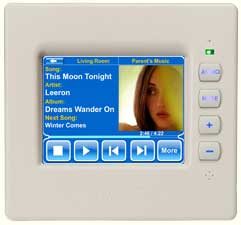 Using an Ethernet network and Cat-5 wiring, the system
allows both digital and analog sources to work in a multi-room
configuration. The advantages are of course endless from "remote
diagnostics and maintenance" to working seamlessly with any web-browser
controllers.
Using an Ethernet network and Cat-5 wiring, the system
allows both digital and analog sources to work in a multi-room
configuration. The advantages are of course endless from "remote
diagnostics and maintenance" to working seamlessly with any web-browser
controllers. 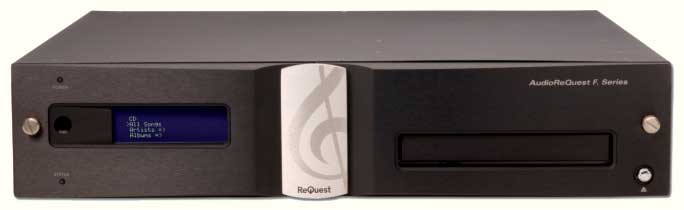





 YouTube
 Facebook
 Twitter
 LinkedIn
 Pinterest
 Google+
 Instagram
Magazine Publishing Solutions by
 Advontemedia