
|
||||||
|
On the
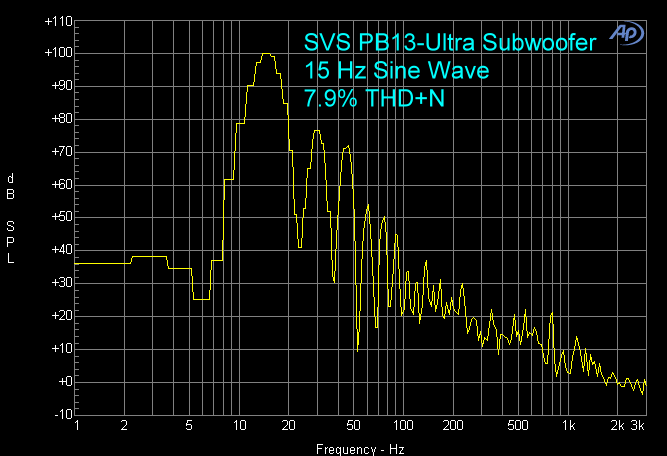
Bench At 15 Hz and 100 dB output, THD+N was slightly less than 8%. That's very good performance.
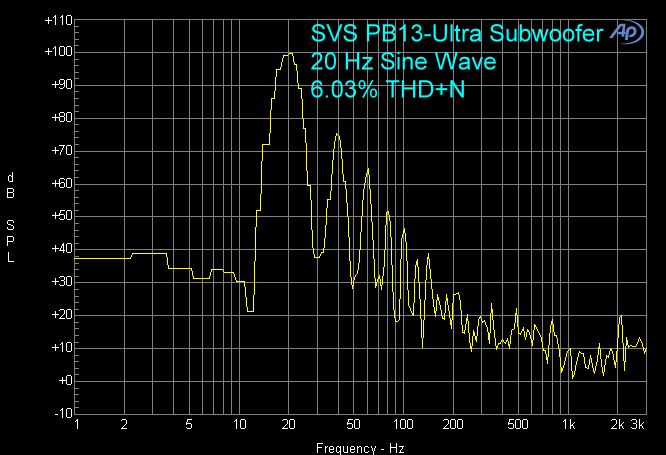
At 20 Hz, 6% THD+N.
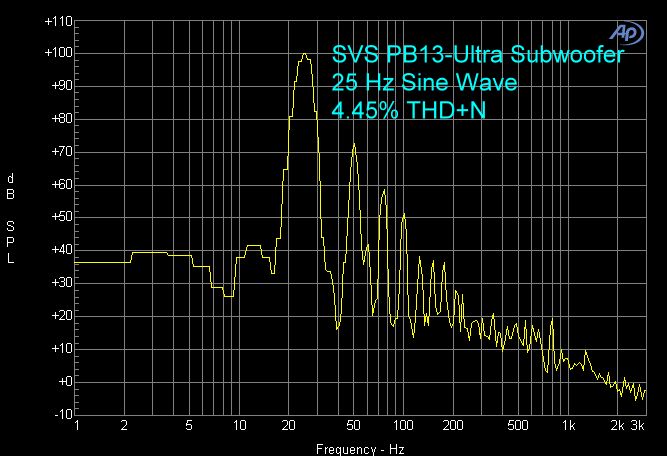
At 25 Hz, less than 5%.
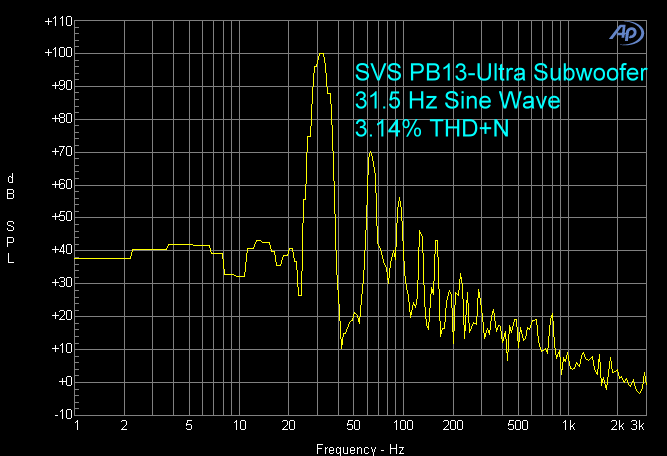
At 31.5 Hz, about 3% THD+N.
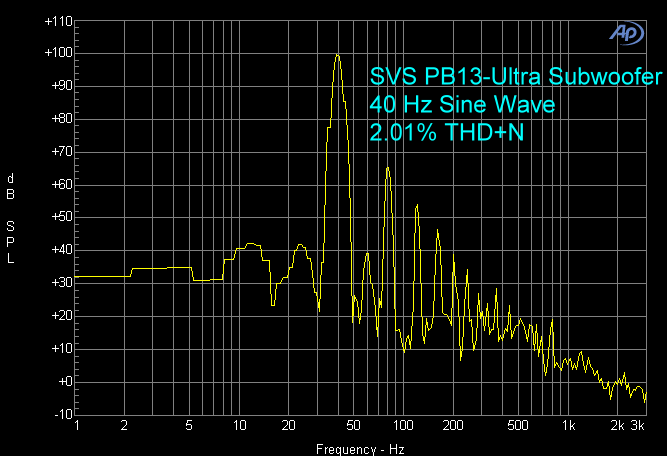
At 40 Hz, 2% distortion.
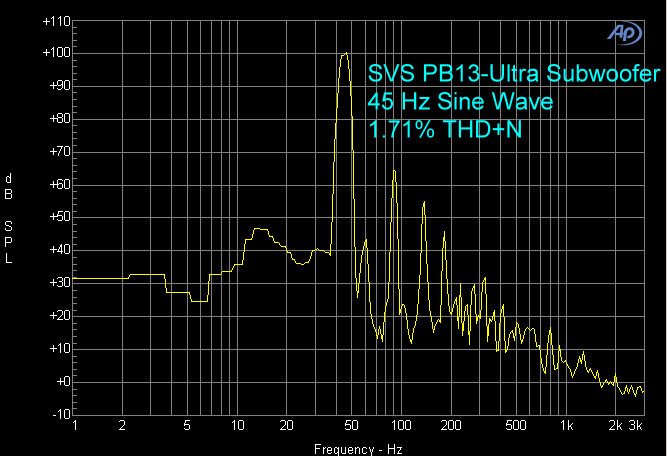
At 45 Hz, 1.71%.
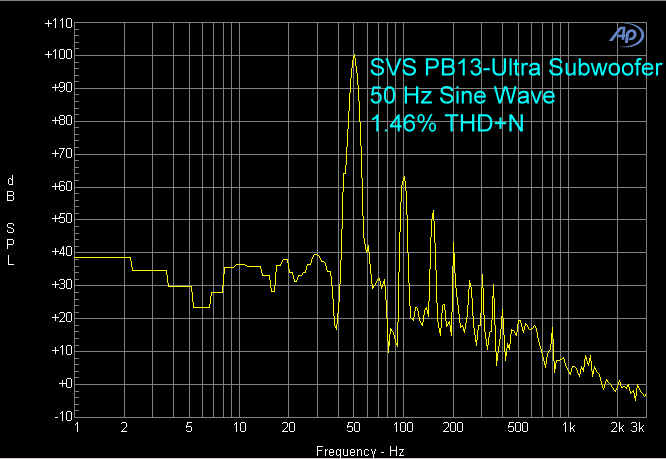
And, at 50 Hz, less than 1.5%. All in all, excellent. Notice that in every case, the third harmonic was less than the second. In my experience, this means that the driver/amplifier combination was capable of delivering a lot more at each of the frequencies tested. This is particularly impressive at 15 Hz. When the limits are approached, the third harmonic becomes larger than the second.
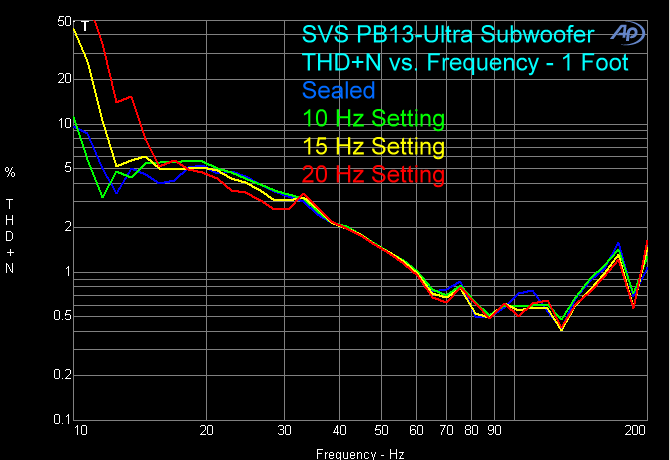
For the graph shown below, 160 individual THD+N measurements were taken and plotted vs. frequency. The results indicate that the 10 Hz mode setting (two port plugs inserted, and 10 Hz selected on the Subsonic Filter dial), delivers the best performance at this volume setting (50 Hz was set to 100 dB output at 1 foot in the Sealed configuration, and that volume setting was left the same as subsequent port plugs were removed). The fact that it produced only about 10% THD+N at 10 Hz, in the 10 Hz setting, is truly amazing. And, it stayed below 6% down to about 12 Hz. Notice that regardless of the setting, THD+N stays relatively the same from 20 Hz and up. What this means, again, is that the PB13-Ultra is capable of delivering much higher output than was used in this particular test, all the way down to 20 Hz. In other words, it's a dynamite performer!
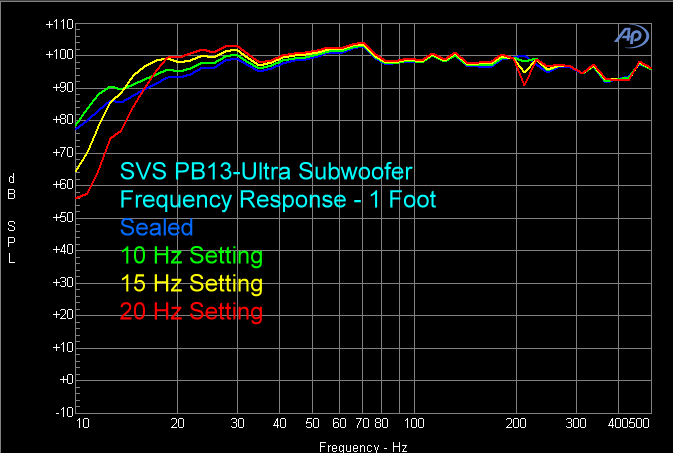
In this frequency response test, again, the 10 Hz setting gave the best results below 20 Hz. But notice that the 20 Hz setting gave the flattest response to 20 Hz, and is right on the specification of 18 Hz - 150 Hz ± 3 dB. So, you have to decide whether you want it to play deeper than 20 Hz, or flatter to 20 Hz. That's the purpose of having three ports and three port plugs available.
Conclusions OK class, what have we learned here? (1) A big enclosure is good; (2) A powerful amplifier is good; (3) a beautifully designed driver is good; (4) Properly configuring all of these components so they work together optimally is good; (5) SVS does it right, and practically gives it away ($1,499 for this thing is a phenomenal price!) P.S. - You may have to wait
a bit, as I think they are already sold out through October. - John E. Johnson, Jr. -
|
||||||





 YouTube
 Facebook
 Twitter
 LinkedIn
 Pinterest
 Google+
 Instagram
Magazine Publishing Solutions by
 Advontemedia