
|
|||||||||||||||||||||
|
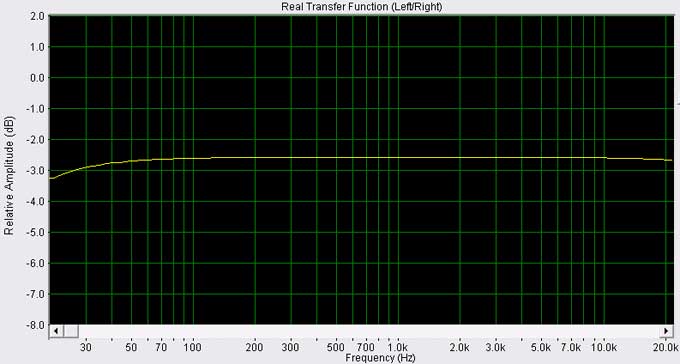
Listening Bottom line: the Onkyo TX-SR805 receiver sounds as good, I would even say better, than just anything else out there within its price band and can even give some much more expensive pieces a run for their money. Gone are the days of "tube rolling" and other such romantic notions when it comes to how a piece of audio hardware sounds. It all comes down to two things: IC selection and implementation. We cannot judge a DAC chip or op-amp by itself, since slight variations in the underlying topology can make, literally, all the difference. Onkyo is really pushing even their own envelope here. We used to talk about DACs and amps having the "British sound" or the "Japanese sound", but with the increased education in the hi-fi marketplace, what we are really after today is one thing: neutral sound. That is, sound that is so true to the signal that you cannot classify it. Call it "The True Sound". And that's what you get in the 805. Whether we used it on its own at judicious playback within its abilities, or slaved it to a known power amplifier to judge its line level performance, what we got was the real enchilada, period. Sorry about not waxing poetic, but I think those days are behind us. Phrases like "papery dryness" and "fuller bass" may still be all we have to describe the much more subtle voicing which is (perhaps unfortunately) still present in speakers, but here we are only talking about reconstituting the waveform (at the DAC level) and then passing and/or amplifying that thereafter. Simply stated, "Onkyo gets it right". You'll have to multiply your investment by a factor of three to five in order to shave off that last hint that you are listening to digital and not some hypothetical high definition analog master. That makes the 805 and downright bargain, even if you never used its amplifiers. Speaking of which . . . . On the Bench This is where it all comes to a head: THX Ultra2 power inside a $1,099 receiver. How did they do it? The obvious answer is, "They put the lion's share of the cost into that really, REALLY big power supply". True enough, but let's dig deeper. In all common amplifier topologies, low-impedance loads have the inherent consequence of increased heat as the greater current (as opposed to voltage) is delivered. Make no mistake: no matter how "good" a receiver is (no matter how much it costs), it cannot compete with separate power amplifiers for this reason. There is simply too much crammed into one box. Elaborate means of dissipating heat are possible, but they are expensive to the point of making the pursuit futile (i.e., you might as well just go the way of separates). The 805, as we previously noted, has a pair of intelligently implemented on-demand fans to help change the air, but that does not preclude it from having what is common in any decent (and safe to use) receiver: a setting for low impedance speaker loads. Specifically, in this case, you must set the receiver for either >6ohm loads or >4ohm loads. This is of particular importance at this juncture, because of exactly what that setting does. In a nutshell, it biases the power supply for a little less voltage and limits output as such. A responsible report of the receiver's power amplifier performance would not be complete without looking at both settings. I've seen advice being given elsewhere that the 6 ohm (or more commonly 8 ohm) setting on receivers in general should be used regardless of the attached speaker's impedance because that setting does give more output. The setting is in fact there for safety reasons: driving a 4 ohm speaker in the 6ohm setting will cause the unit to get hotter than the governing bodies deem acceptable, though there are some who feel the governing bodies are using outdated steady state tests. Caveat emptor, proceed at your own risk, and all that jazz. I'm just here to report the facts. Frequency response and THD+N measurements were taken with a 2.0V RMS output from the Onkyo to our measurement sound card. Within the audio band, the Onkyo exhibits a measured frequency response of 20 Hz - 20 kHz, + 0, - 0.75 dB. Not dazzling, but adequate.
Inter-modulation distortion at the line level was 0.0063%, which is excellent. Next we confirmed Onkyo's published spec of 130W per channel, two channels driven. We loaded two channels with 8 ohms (with the hardware set to the default >6ohm) and brought two channels up to 130W output where we measured THD+N at only 0.0348%. Again, excellent. Next we moved on to the "cooking" tests. All tests were conducted "two channels driven" with the same 2.0V RMS input. First we left the 805 in its 6 ohm setting, brought the output up to 1% THD (popularly accepted as the point of clipping), and measured the output. We then loaded it with 4 ohms on each channel and measured. Switching the 805 to its 4 ohm setting we again measured with 8 and 4 ohm loads. The results are tabulated as follows.
* Time limited test under controlled laboratory conditions. One can see at a glance the performance of the amplifiers in their default setting is remarkably good for a $1,099 comprehensively featured receiver. The behavior is commensurate with good amplifier design in that, transiently at least, it will dump a lot of current as evidenced by the 270W into 4 ohms. Not quite "doubling down" as the saying goes, but none actually do so (cleaver spec'ing just makes it seem like some can). Switching to the 4 ohm setting, we see exactly what we expect: reduced output as compared to the default setting, regardless of actual load. While at first glance a dramatic shift from the default, these numbers must bear interpretation. Having only 87 watts output seems not so good, but the >4ohm setting should only be used with low impedance speakers where for the lion's share of the spectrum the Onkyo will be in that 151 watt territory, which is only about 5% less than the 173 watts into 8 ohm load of the >6 ohm setting. It would have been useful to test five or seven channels simultaneously since looking at two channels on a multi-channel amplifier can really only show us the voltage limitation (but unfortunately we didn't have enough resistors at hand to do so). Onkyo advises us though that their topology is such that current is pretty much the same between the two settings. Even so, under certain circumstances with the 4 ohm setting, it may technically, though counter intuitively, work better in that while it may clip earlier, it will recover quicker (since it takes longer to restore a drained reserve than to simply recover from a limited voltage induced clip). Empirically speaking, no matter how you chose to interpret it, there is plenty of power. For virtually the entire in-use review period, I used M&K MPS2510 front satellite speakers (high passed at 80 Hz as per THX) which have a decidedly difficult 3.5 ohm nominal load. The 805 was set to the appropriate 4 ohm setting, and in my actual use at least did not exhibit any audible distress, even though I thought it might on certain material and playback level combinations I was messing with. Let's keep in mind that for years most people put a great deal of credence in THX for amplifier certification, if nothing else, and their incredibly complex, but correspondingly useful, battery of channel/load/level permutation tests were of course met satisfactorily by the 805 in its finished form. I've often joked with John Dahl at THX that if I ever damage a THX speaker hooked up to a THX product, set up per THX's recommendations in an appropriately sized room, that he'd have to make good for it. Well, this review is pretty much over, and I've yet to make a claim. Ultimately, Onkyo brings Ultra2 performance down to the unprecedented price point by delivering the performance needed without going overboard. It can drive a THX Ultra speaker in a THX sized room with real-world program material, but it can't drive a 2 ohm test load indefinitely (as a certain $5,000 power amplifier I know can). OK, so don't use the 805 with electrostatic speakers. Another significant observation, particularly in these times of energy and environmental conservation, is the 805's power consumption. Like other receivers I have checked on, it uses less electricity at idle when it is set to 4 ohm: about 95 watts drawn from the wall as compared to 135 watts when in the 6 ohm setting. More distressing though is that if HDMI-Control is enabled, the 805 will draw 68 watts when completely turned off! Compare that to an almost immeasurable >2 watts when that feature is disabled. What HDMI-Control does is let the Onkyo control another piece of equipment via HDMI. For example, turning on the Onkyo could also turn on a TV or Blu-Ray player connected via HDMI. At my present cost of power, that "convenience" will run me $60 a year. In my opinion, this is a significant waste of power, especially when the same can be achieved through macros on a remote, or other more power miserly means. Conclusions Although this review has gotten decidedly lengthy, it is necessarily so. The purpose here is to equip our readers with the knowledge necessary to make proper assessment of the products you are considering spending your money on. The 805 requires the depth of this report for you to appreciate what an incredible value it represents. Over the past decade of writing, I've seen my share of products, many of which I write about, others I do not. From that experience I've seen some company's offerings wax, wane, and wax again such that no blanket recommendation can be made. Every piece must be examined by itself. A few names however have distinguished themselves, in my estimation at least, to the point where while I still would like to see something first hand, their products, even the yet unseen become "safe bets" (if you happen to enjoy that whole Vegas scene). Onkyo is one of these special companies. Consistent has been their presentation to me, and while I always find design elements to, shall we say, comment on, there is a genuine sense of pushing the products forward: each iteration builds on the last. They just keep getting better. Hats off to those Onkyo engineers half a world away. You've got another winner, so says this critic. My thanks to Sandy Bird for his assistance in measuring this piece.
On loan for the sake of this review or used by proxy:
Sony BDP-S1 Blu-ray Disk player Samsung HDCP compliant monitor Nvidia 7600GS PCIe Video Card (HTPC) Panasonic 900 LCD Projector
|
|||||||||||||||||||||





 YouTube
 Facebook
 Twitter
 LinkedIn
 Pinterest
 Google+
 Instagram
Magazine Publishing Solutions by
 Advontemedia