
|
|||||||||
|
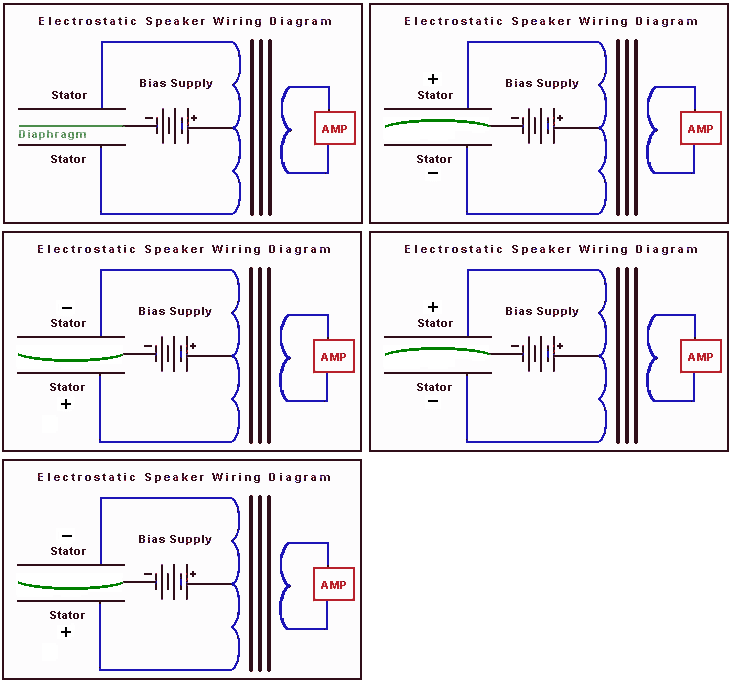
Introduction Falling into this category are ribbon, quasi-ribbon, planar-magnetic, and electrostatic (ESL) speakers. They are defined by their flat drivers. While the first three of the sub-types mentioned above use permanent magnets to push or pull the flat electrical conductor, ESLs use a statically charged membrane (diaphragm) only about 12µ thick (about the size of a red blood cell). The amplifier power (music) is applied to "stators", which are perforated metal plates situated very close together. In between is the statically charged membrane. The varying signal voltage applied to the stators pushes and pulls the membrane back and forth, which moves the air, and you hear the sound. An animated graphic illustrating this is shown below.
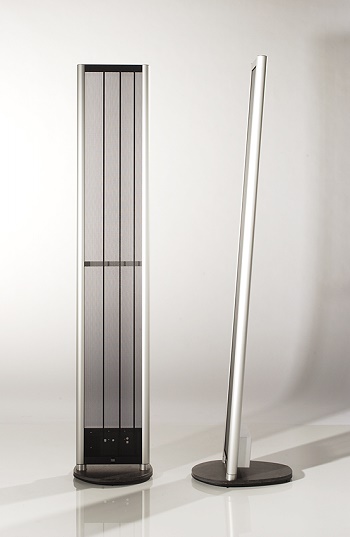
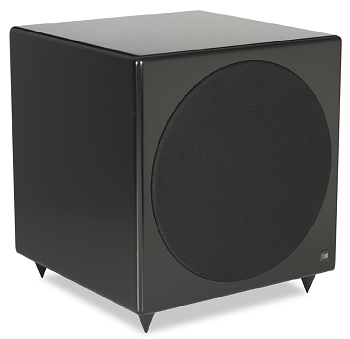
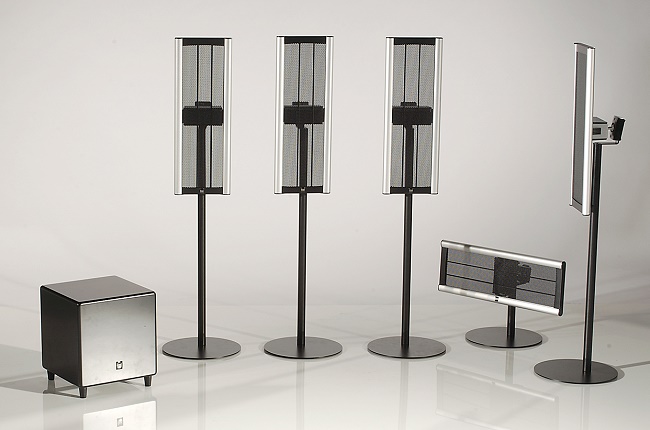
The static voltage is produced by a DC bias supply connected to the output of a high voltage transformer. The amplifier power also passes through this transformer, so that the ultimate voltage on the stators is much higher than it was when it exited the amplifier. One of the main limitations of ESLs is this transformer. Regardless of how powerful the amplifier is, the transformer saturates at a certain point, and no more loudness can be achieved. However, this tradeoff is balanced by the fact that the membrane, or diaphragm, is so light (low mass), that the sound has incredible detail. Although the tweeter in a conventional speaker has a very light driver (often a small piece of silk), and thus has good detail, the midrange driver cone has significant mass compared to an ESL, and it is in this midrange that the ESL therefore excels. Bass, on the other hand, is a real problem with ESLs because the membrane cannot move very far, and therefore, cannot move very much air. So, low frequencies suffer. Also, the very low frequencies tend to cancel out because the air from the rear panel movement comes around to meet the air moving out from the front of the panel. Usually, this is taken care of by use of a conventional woofer driver in the base of the ESL, covering frequencies from about 30 Hz to 200 Hz. But, using such a "hybrid" design introduces the phase delay issues that plague the crossover regions of all conventional speakers. And, the 200 Hz region is very important. So, the high end ESL market offers "Full Range" products. I put the Full Range in quotes because they are not really full range, down to 20 Hz. Even large panel ESLs really just cannot move enough air to get a flat response down there. The best they can do is about 35 Hz - 40 Hz. To solve this problem, a separate subwoofer is used to get that last low octave. This is the case for the Final Sound 1000i ESL. 1000i Final Sound is located in The Netherlands and was founded in 1992. Until 2002, their products - due to manufacturing costs - were purchased only by the high end (read mucho bucks) market. Then, they came up with a way to build them in modular form, and that reduced the manufacturing costs, but had no effect on the ultimate quality at all. Bottom line on that: still kind of expensive (what isn't these days?), but now affordable. The technique really was just a way to make the whole thing lighter. The ESLs I am used to weigh about 100 pounds, but the 1000i, which is Final's largest unit, is only about half that. So, they are relatively easy to move when cleaning behind them. One other thing about Final Sound ESLs that is unique, is that the amplifier power goes to the membrane (actually, a conductive center inside the membrane), and the static voltage is applied to the stators. They have patented this technology, and claim that it provides a clearer and more responsive sound. At more than six foot six, the 1000i is about as tall as a San Francisco 49'ers line backer. But, at only 14" wide, it is only as broad as that line backer's leg. So, it's tall and slender, relatively speaking. Also, it is only a couple of inches in depth. Being transparent - or perhaps translucent - this tall, slender, thin ESL is a real spouse pleaser because it does not overpower a room with its bulk. This is typical of ESLs, and every female that passes through our labs, upon viewing any ESLs I happen to have on hand, has said, "I want them." So, for those of you who are having a tough time convincing your spouse that you "need" a pair of really, really nice, but pretty big speakers, your problem may be solved. Due to the modular approach, Final Sound has been able to design small ESLs too, and these would be ideal for home theater use. One such package is the 90HT ($2,498), shown below. Since these ESLs are pretty small, you need to set the crossover higher, around 120 Hz, and you should put the subwoofer close to the front left/center/right speakers, since sounds from 50 Hz to 120 Hz can be localized.
Even with this small ESL, you don't have the phase delay problems of convention two-way speakers, because the ESL membrane produces sounds at high frequencies and also the midrange.
|
|||||||||





 YouTube
 Facebook
 Twitter
 LinkedIn
 Pinterest
 Google+
 Instagram
Magazine Publishing Solutions by
 Advontemedia