
|
||||||
|
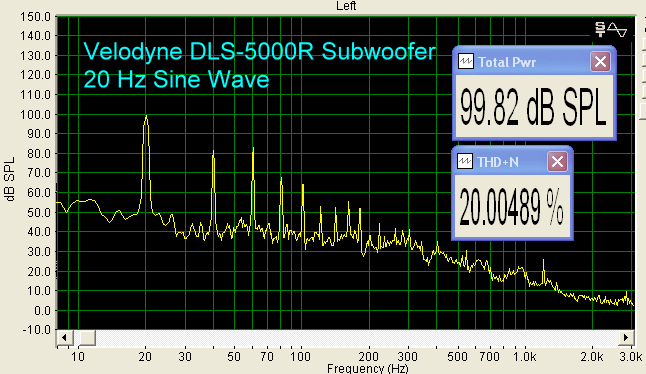
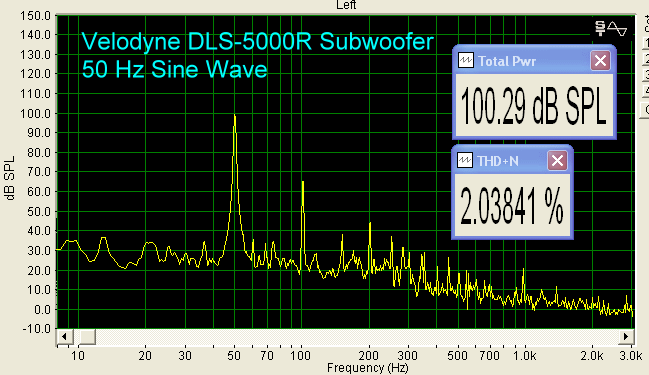
On the Bench Distortion measurements were taken with the microphone 15" from the center of the driver. Room response measurements were taken at 2 meters, and MLS measurements were taken at 15". At 20 Hz, which is below the tuning point, THD+N was 20% at 100 dB.
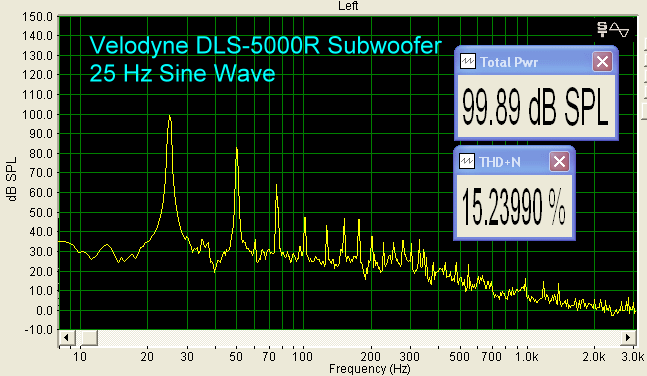
At 25 Hz, THD+N was still high.
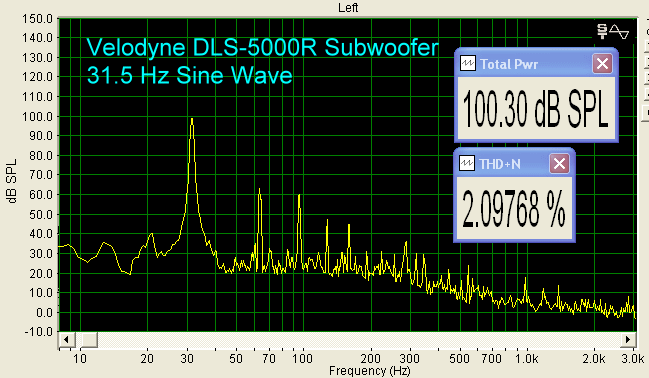
At 31.5 Hz, THD+N was now quite low, at 2%.
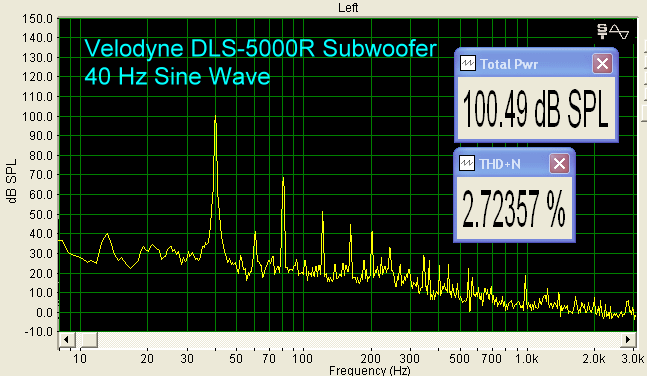
At 40 Hz, distortion was a bit higher than at 31.5 Hz.
Distortion remained about the same at 50 Hz, and was low.
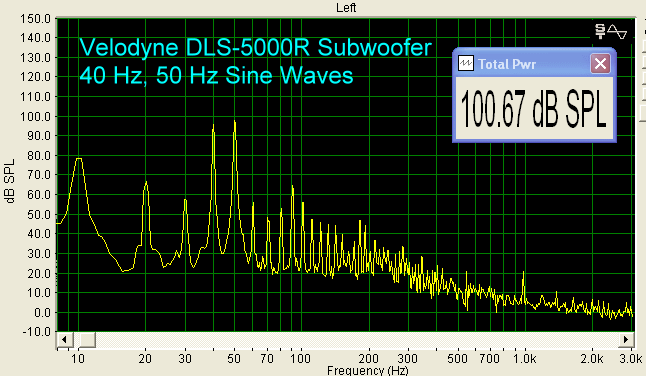
Using 40 Hz and 50 Hz sine waves, testing for IMD, the A+B peak at 90 Hz was at 64 dB, compared to the fundamentals at 96 and 98 dB. The B-A peak, at 10 Hz, was at 78 dB.
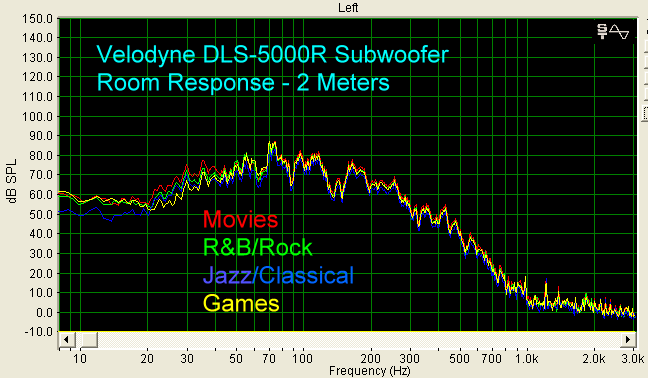
Shown below is the room response, taken at 2 meters, for the various EQ modes. The volume setting remained the same for all four, and the phase was set to 00. You can see that the response changes quite a bit below 70 Hz, depending on the mode. The Jazz/Classical mode appears to be the flattest, from 20 Hz to 70 Hz, and is the one I preferred for all types of music.
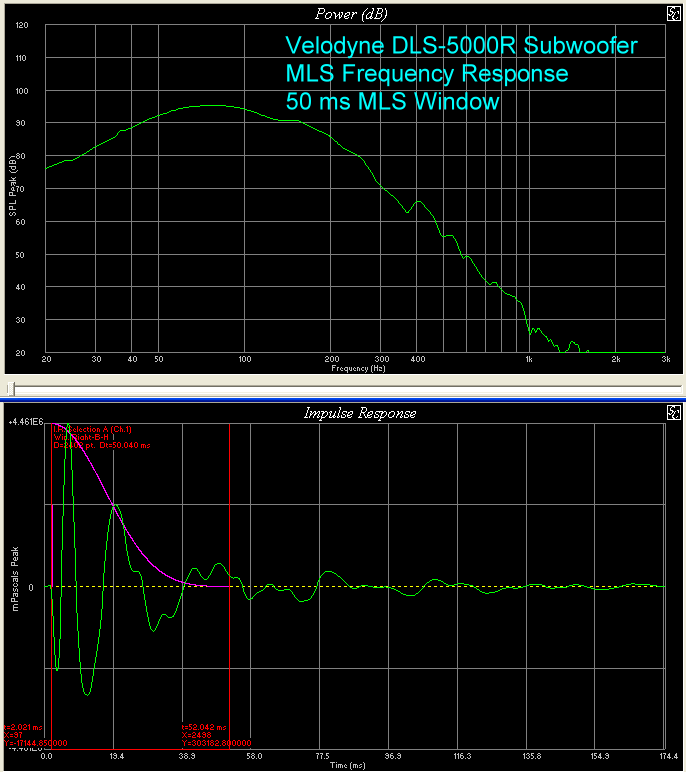
The quasi-anechoic response is shown below. It is pretty much a straight line roll-off below 70 Hz.
Conclusions
I have never been surprised at the high quality of
Velodyne subwoofers, because I have listened to so many. What does surprise
me here, is that the performance is so good at $799 street price. Even
without the digital EQ, this is still a great subwoofer, but with the
digital EQ modes, it is also a lot of fun.
|
||||||





 YouTube
 Facebook
 Twitter
 LinkedIn
 Pinterest
 Google+
 Instagram
Magazine Publishing Solutions by
 Advontemedia