
|
||||||||||
|
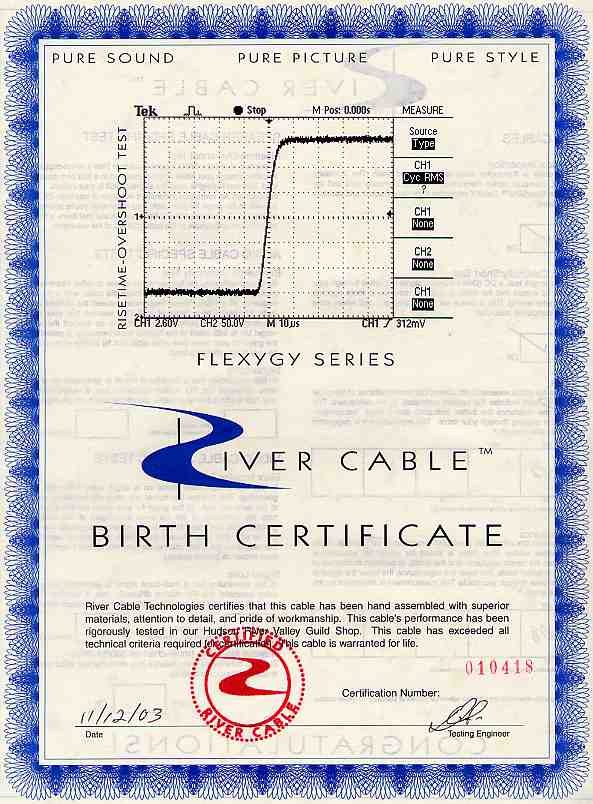
Introduction You can pay 10 cents a foot and $1,000 a foot for cables. So, what are you paying for in the big dollar cables? The design has something to do with it. For complicated ones, the winding of the conductors is very difficult. In some cases, the materials are extruded through a die, including Teflon, silver, and copper. The discard rate is high, and this has to be paid for in the final cost of those cables that make it through the manufacturing process. Silver is more expensive than copper, and this raises the price too. Gold plating on the connectors is not really an issue, since it is so thin, there is only a very tiny amount. Finally, there is the connector. The plugs on an expensive set of cables are much different than the ones on the cables that come in the box with a mass market receiver or DVD player. To my way of thinking, the connectors are every bit as important as the wires. There are lots of cable companies on the Internet now, probably because everyone has their own ideas as to what makes a good cable, and it is not terribly expensive to set up a shop using an OEM supplier building cables to one's own specifications. Fortunately, cables are lightweight compared to receivers and amplifiers, so buying them over the Internet is a great way to purchase them, as shipping costs are low. The Design River Cable is relatively new on the block. Their claim to fame from what I can tell is in two areas. One is that they supply an "On the Bench" data chart for every set of cables. They measure DC resistance and capacitance, as well as rise time, and include the chart with the cable (each has a serial number), with a certification stamp. Shown below is the front of the certificate that I received with the review sample set of speaker cables, showing the rise time test results.
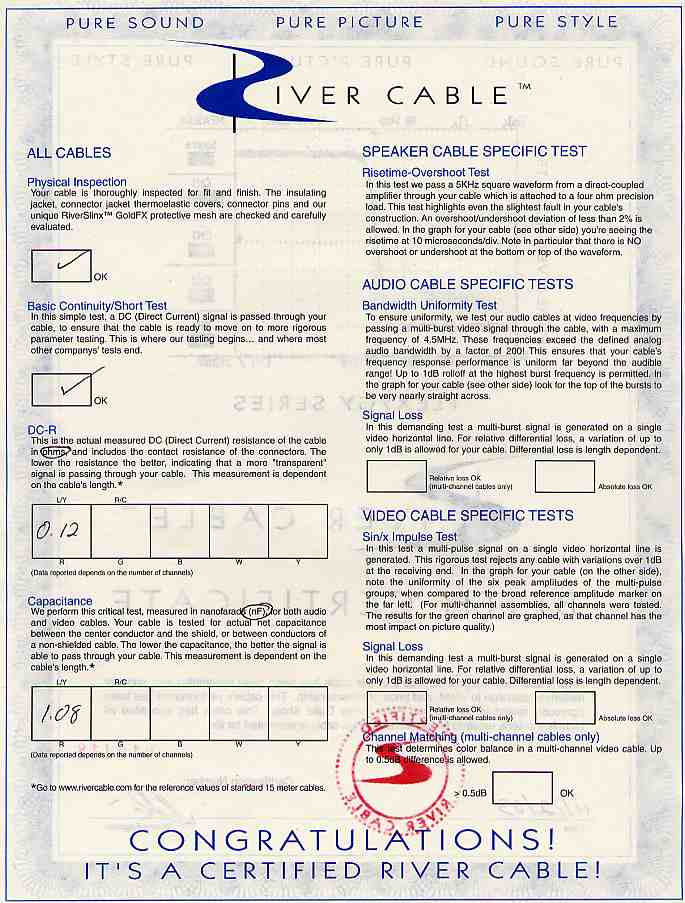
Here is the back of the certificate. DC resistance and capacitance measurements for the cables are indicated. It would be nice to also have an inductance measurement.
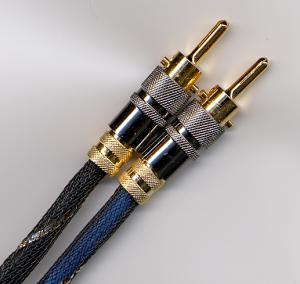
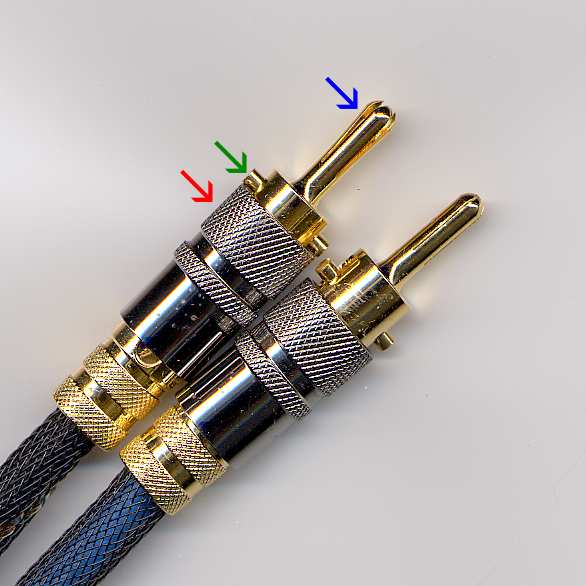
The second area that River Cable appears to excel is in the connectors. Below is the connector on the FLEXYGY speaker cable (mine came with bananas, but you can get them with spades if you like). First, you insert the banana into the speaker binding post. Then, you twist the knurled ring (red arrow), which pushes a set of pins on the front of the plug (green arrow), and this expands the banana (blue arrow), which makes for a very secure connection.
The Listening Of course, when all the hype is said and done, the real proof is in the listening. I used my Classé CDP-10 CD Player, BAT VK-5i Preamplifier, BAT VK-75SE Power Amplifier, and Magneplanar Speakers. Since I have my speakers set on opposite sides of the room, I need long cables. The review set was 8 meters. Any problem in the physics of these cables would have been apparent. However, they sounded great! Plenty of treble and bass that would have been otherwise reduced if there were too much impedance (both resistive and reactive). The cumulative AWG of 8.5 is huge, and this is important in long speaker cable runs. I also really appreciated having the lock-down banana plugs. These cables are heavy, and the weight could pull the bananas out, depending on how high up your speaker binding posts are located on the speakers. Conclusions River Cable obviously knows how to compete in the tough world of hi-fi cable marketing. Their cables are beautifully built, they sound great, have some features that others do not, and are an excellent value for the dollar.
|
||||||||||





 YouTube
 Facebook
 Twitter
 LinkedIn
 Pinterest
 Google+
 Instagram
Magazine Publishing Solutions by
 Advontemedia