
Rotel RSX-1055 7.1 Surround Sound Receiver May, 2003 John E. Johnson, Jr.
Introduction
Rotel is a British hi-fi manufacturer whose products I have enjoyed for some time. We use their RMB-1095 five-channel, 200 wpc power amplifier here in the lab. It is very high quality, but I have to confess that part of the reason I keep it here is that it's beautiful. During the last couple of years, Rotel changed their faceplates, and wow, what a difference! Whoever came up with that look really earned their paycheck. Although Rotel is mid-priced, it is high-performance, and the new look makes them appear twice their MSRP, which is a marketing department's dream, and a tweak to the consumer's ego all rolled into one.
The RSX-1055 is a continuation of this new look. Although it is only $1,299 MSRP, one might guess that it is much more expensive. And, ah ha! They are also doing something a little sneaky. They rate it at only 75 watts per channel x 5, into 8 Ohms. Notice that the weight is 45 pounds. There are some mass market receivers out there that rate their amplifiers at much higher wattage, and don't weigh more than the 1055. Remember, heavy is good when it comes to amplifiers. It means a big power supply. The THD is rated at 0.09%, more than some mass market receivers, meaning that they likely use less negative feedback. So, what Rotel is doing here is publishing specs on the receiver like a really expensive high-end manufacturer would do, and letting the press show that it does sound better than the average mass market product, even though it has a mass market price. Top that off with a look that reminds me of Mark Levinson, and voila, their sales will move into the heavens. Very clever!
The Design
The 1055 takes a simple approach to buttons, which I like. There is no fold-down panel to access the remaining buttons. Everything is on the front panel. All buttons are shaped the same, in two rows across the front, with the volume control in the middle. Easy to get to, all the time. My eyes are not what they used to be, so with just about any product I buy these days that has buttons, I put little green, yellow, or red stick-on dots on or above the buttons that I use most often. This lets me access the buttons I need when the room is dark.
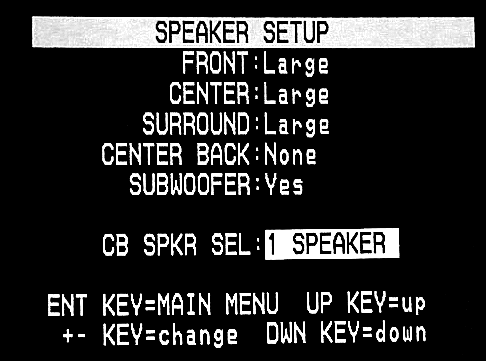
The left side panel buttons are for the tuner, with numerous presets for stations of choice, while the right side buttons are for selecting the input and for selecting alternate decoding modes DPL-II and DTS Neo:6. You can also select two-channel, or DSP modes. An LED panel at the top indicates the status, including the input and volume, and whether or not DSP is engaged. The On-Screen Display (OSD) is required for setup, such as speakers being "Large" or "Small" (bass management), low-pass crossover setting (40 Hz through 120 Hz in 20 Hz increments, for use when the "Small" setting is employed), and most other things.
If you click HERE, you can see a large photo of the front panel, so you can read the labels on the buttons.
Here is a sample readout of the LED panel. When you click "Menu" on the remote control, a small indicator shows on the LED panel as "OSD", meaning you have to go to your TV monitor at this point to make whatever changes you want. I would suggest future versions to have as many menu items displayed on the LED front panel as possible, even if in abbreviated form, to go along with the OSD on the TV monitor.

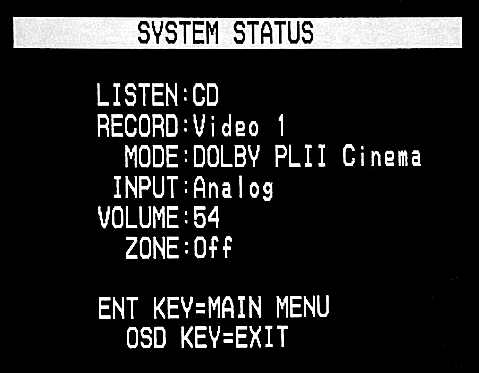
And here are some sample OSD menus that I photographed from my projection screen. The System Status menu duplicates the information from the LED front panel. It also shows here that the CD input has been configured to have analog being sent to it rather than digital. So, if you connected a Toslink cable from your CD player to the Toslink input on the 1055, with the configuration set to be receiving an analog input, it would not work. There is no automatic recognition of the input signal. That is not necessarily bad, but you have to pay attention to what you are doing.
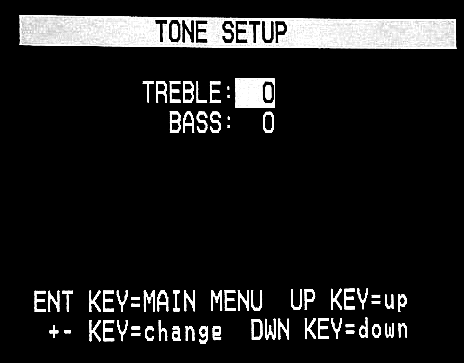
You have to go into the menu to change the tone settings.
The Speaker Setup menu.
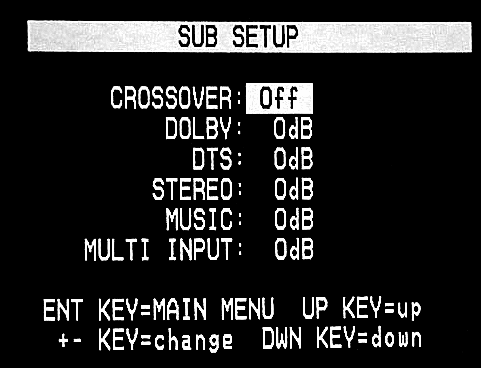
The Subwoofer Setup menu. You can configure it so that the basic subwoofer volume changes depending on the type of decoding.
The 1055 decodes DD, DTS, DPL-II, DTS ES Discrete (6.1), and DTS Neo:6. That pretty much covers today's formats.
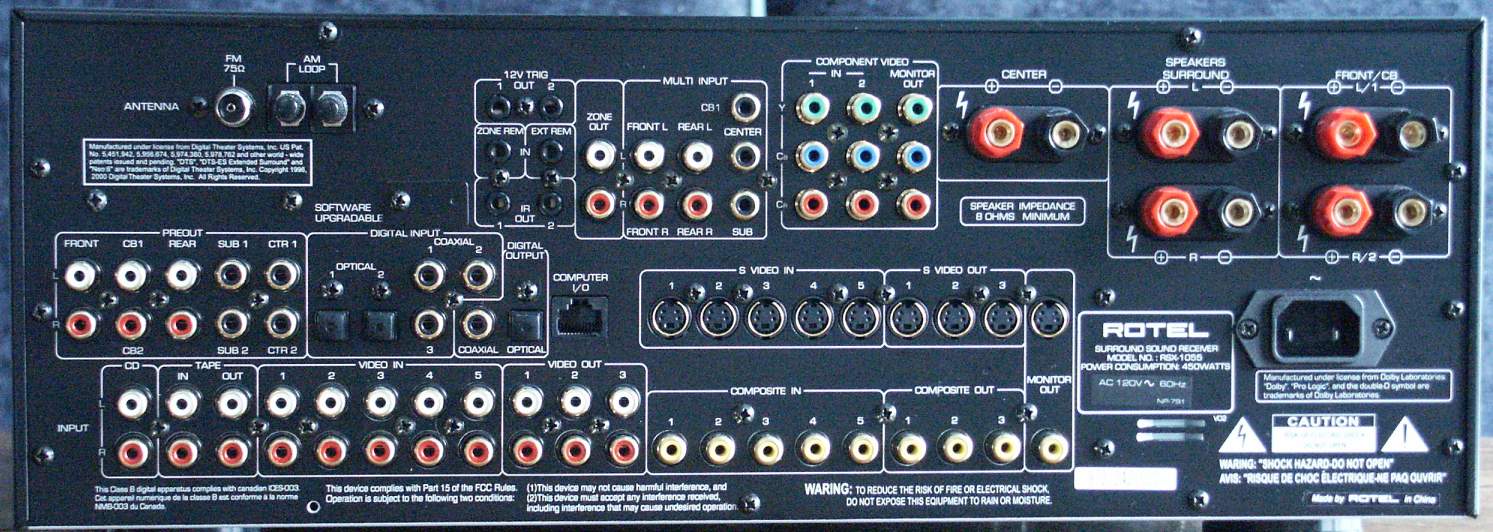
The rear panel is full of inputs and outputs, like all receivers these days. There are pre-ins for each channel (6.1) when using DVD-A or SACD players with 5.1 analog outputs along with pre-outs for each channel in case you want to use an outboard power amplifier. There are two subwoofer pre-outs, when many receivers have only one. The 1055 has three sets of component video inputs, with one set of outputs, but as I said, I prefer to go direct from the source to the projector. Even with a wide video bandwidth, which the 1055 does not appear to have, you get some video signal deterioration when using video switchers. Multiple composite video jacks are there, and as soon as manufacturers can dump these and make room for something else, the better. There is no reason to use composite video connections with DVD or satellite. Even our VCRs will not need them soon enough.
There are five sets of speaker binding posts, but there is a Center Back 1 and Center Back 2 pre-out for the two additional channels in this 7.1 receiver. You need to add a stereo power amplifier to use this feature, and an old receiver would work fine for that purpose.
A pair of zone-out RCAs deliver preamp signal to a second room for Zone-2 operation. You will need a power amplifier and speakers in that second room. The AC cord is detachable and un-grounded.
Click on the photo above to see a larger version.
You have to configure the inputs manually, including whether you want a certain input, such as CD, to be a digital input or analog. Again, the OSD is necessary for this. Even tone control adjustment (bass and treble) need the OSD, as do activation of Cinema EQ (reduces the harshness of the center channel that is inherent in some sound tracks programmed for commercial theaters and not reprogrammed in the DVD), and using the Dynamic Range (compressing the dynamic range is useful when watching movies late at night, when you really should be in bed).
For DD and other modes, that old OSD is still required to set them up with such things as Cinema mode DSP and Panorama DSP. It sure would have been nice to just use the front panel LED display for this, but, oh well, this does not affect the sound, and as you will see, the 1055 sounds great. When I use my home theater, I spend 0.1% of the time adjusting the settings and 99.9% watching and listening to movies.
If you have your video sources going through the 1055, the OSD requirement for setup is is not a real issue, as long as you have your TV on, but I like to go direct from the video source (my DVD player) to the projector, rather than going through the video switcher in the receiver, so I found this inconvenient. However, once you have configured everything, it is not a big deal.
More and more receivers and processors are adding the selectable crossover frequency, which is a very important feature to me. Some of my staff disagree with me on this, as they feel the 80 Hz THX crossover spec is proper, and consumers will just have more chances of messing up their system with all these low-pass frequency choices for the subwoofer and other speakers. Personally, I think 80 Hz is too high, as I can localize the direction of frequencies higher than 50 Hz, so if 50 Hz to 80 Hz is being directed to the subwoofer rather than the main speakers, I can hear that part of the "Mains" coming from the subwoofer over in the corner, instead of coming from the left and right front speakers. Anyway, that is my preference, and the 1055 has what I want. Also, by setting the low-pass to 60 Hz (50 Hz was not a choice here), a very significant portion of the amplifier power could be saved, for use with the remaining spectrum, making it much more efficient. For future versions of their receivers, I would suggest 40 Hz to 120 Hz in 5 Hz increments.
The "Large" vs. "Small" bass management settings, including the choice of low-pass frequencies, are not available through the 6.1 analog pre-ins. So, for DVD-A and SACD players, you will need to use the bass management in the player, if it has that feature.
Speaker delay setup is via millisecond assignment, instead of feet, which we prefer. Of course, for Europe, meters would be nice. The delays can be set up differently for each mode, i.e., DD/DTS vs. DPL-II. Although you can translate 1 millisecond for each foot, you have to use 3 milliseconds for a meter, so I believe the future should include a delay menu for setting it up in your choice of meters or feet. One other delay setting for the audio should be added, and that is a general one that takes into account the delay in video caused by digital projector digital processing. It should be in the speaker delay menu, but under a separate heading, such as "Overall Audio Delay to Compensate Video Delay", or something to that effect. Perhaps variable in milliseconds from 0 to 100. The 1055 is specified as "Software Upgradable", and there is a "Computer I/O" jack on the rear panel. Maybe they can add a few of these suggested features to the 1055 via that method.
Some products are coming out now with the ability to put a microphone in the seating position and just let the receiver figure out the proper delay setting for each speaker as it cycles through them with test signals. Instead of measuring distances and typing them in, you can let the receiver do it while you go to lunch at Burger King. Don't forget to add some memory settings for several seating positions. Sometimes I sit on my couch, and sometimes in my easy chair that is across the room. One other terrific thing about this future "Auto-Config", is that the frequency response will also be automatically adjusted with digital EQ. Frankly, I can't wait for this to arrive.
The tuner is very cool in that you can configure it for the layout in North America vs. other parts of the world, instead of one receiver model being made for North America, one for Europe, one for Asia, and so on. Of course, you can also select the language for the OSD, and in fact, the instruction manual came in several bindings for a wide array of languages. There is a Zone-2 setup too, for those who like to have one receiver but listen to music in a second room, such as the dining room, from time to time. This is very handy with radio.
Here is a summary of how I rated the features. Green means acceptable, while red means it could stand improvement. White means it is not a Benchmark requirement (at this point), but simply noted. Later on, we will have a full benchmark specification for SSPs and receivers in use, but for now, a short table is sufficient for the main issues.
| DD, DTS, ES, EX, DTS Discrete 6.1, DTS Neo:6, DPL-II, HDCD | 5.1 Pre-Ins for Use with DVD-A and SACD | Pre-Outs for All Channels | Bass Management | Speaker Delay |
| YES | YES (6.1) | YES (7.1) |
"Large" or "Small" (100 Hz); Separate Adjustment 40, 60, 80, 100, or
120 Hz Crossover for "Small" Setting However, 6.1 Analog Pre-Ins Do Not Have Bass Management |
In Milliseconds; Should Include Feet and Meters |
| Cinema EQ | OSD | Digital Audio Inputs | Video Inputs | Video Switching Bandwidth |
| YES | Required for Most Configuration Settings; Not Available with Component Video Connections | 3 Coaxial; 2 Toslink Optical |
Composite, S-Video, Component
|
10 MHz � 3 dB (Benchmark Standard is 100 MHz) |
| Maximum Digital Decoding Frequency | AM/FM Tuner | THX Certified | I/O Port for Software Upgrades | Remote Control Backlighting |
| 96 kHz | YES | No | Yes | Yes |
The remote control is big, and it is backlit. The principle buttons are on the main layer, while a second layer is available when you slide the cover down (photo shows the cover down). The remote control is necessary for configuration along with the OSD. The buttons are different shapes, nicely laid out, and again, that backlighting is great. It does not come on during the daylight even if you click the control on the side. It will only come on if the room is dark. An LCD display indicates what input you are using and what you are activating. It is programmable and about as complete as any universal remote I have seen.

Click on the photo above to see a larger version.
The Sound
Ah, the best part. I was very pleased at such a modestly priced receiver sounding so nice. It did not have the glare that some receivers do, and at my age, I don't care for harsh sounds of any kind. Setting the speakers to "Small" and using a low-pass frequency of 60 Hz really does make a difference as to the dynamic output of the receiver, but low-pass settings are a personal thing and dependent on what speakers you have. So, I set the speakers to "Large", which is what I have here. The dynamics are more limited this way, since the power amplifiers are handling all those power-draining low frequencies. Even though my floor-standers don't go to 20 Hz, the amplifier still is delivering them, and the drivers are attempting to reproduce them.
I thought perhaps that Rotel had underrated the specifications, but it sounded like 75 watts per channel, and as you will see from the bench tests, it delivers the rated power right on the money. But, from the smoothness of the sound, I suspect Rotel has just opted to make the receiver sound better rather than have it try to deliver more power through tricks such as heavy use of negative feedback and lots of gain stages. Bottom Line: Use this receiver with a sane hand on the volume control. If you want to rattle the windows, use the low-pass option at 60 Hz and get a big subwoofer. Otherwise, consider one of Rotel's more powerful units (you can also add an outboard power amplifier to the 1055's pre-outs).
By the way, I am getting so I really like DPL-II. I am glad it is now standard on most new receivers.
On the Bench
The 1055 clipped (1% THD) at 96.8 watts RMS x 2, 1 kHz, two channels running into 8 Ohms each. This is almost right on the specification of 100 watts RMS with two channels running.
We now use digital signals as well as analog signals to test SSP and receiver DAC capabilities. The maximum sampling rate that the 1055 could decode was 96 kHz. It could not decode 192 kHz. At 1 kHz PCM digital input (setting the volume control to give 5 volts output from the power amplifier into 8 Ohms), distortion and noise floor were lower with 24/96 than with 16/44. The spectrum was gathered from the pre-out rather than the speaker out. At 10 kHz input, the noise floor was again lower, but the distortion actually increased. We will have more to say about this kind of result as we gather data on additional review products.
I used the 2-channel mode for the measurements, to bypass processing.
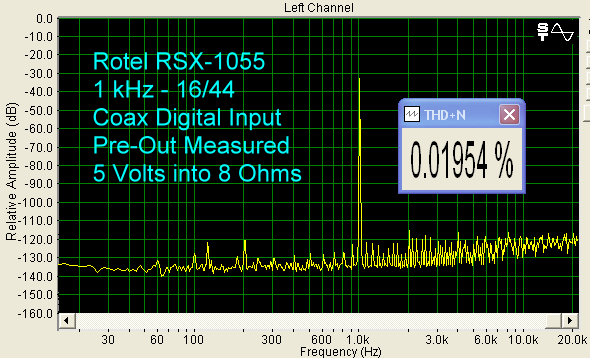
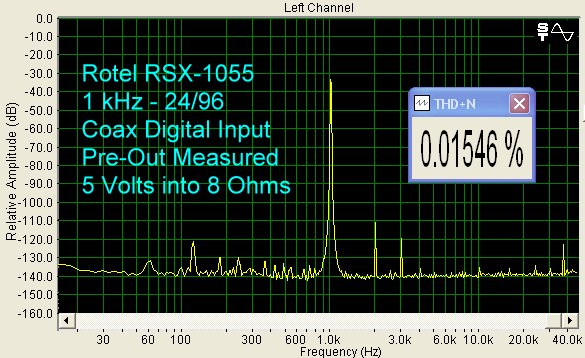
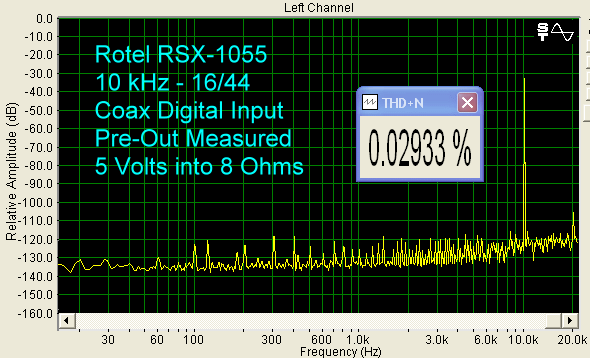
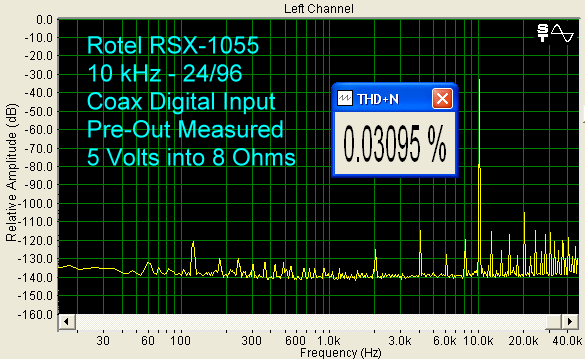
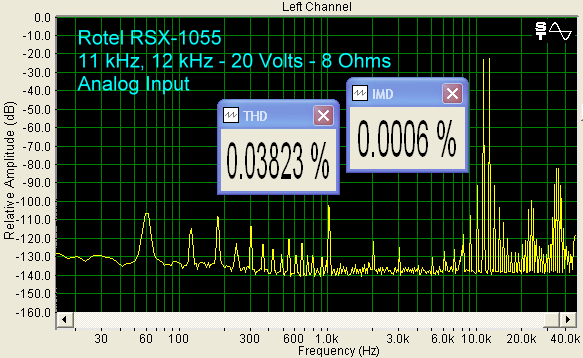
Using analog input signals and taking the spectrum from the speaker out, distortion remained within Rotel's specification or very close to it, with all test signals and outputs to 72 watts x 2 (24 volts into 8 Ohms on two channels simultaneously). Distortion is more odd-ordered than even-ordered, typical of Class A/B push-pull solid state products.
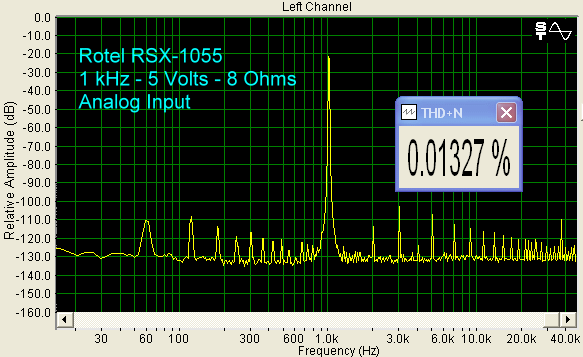
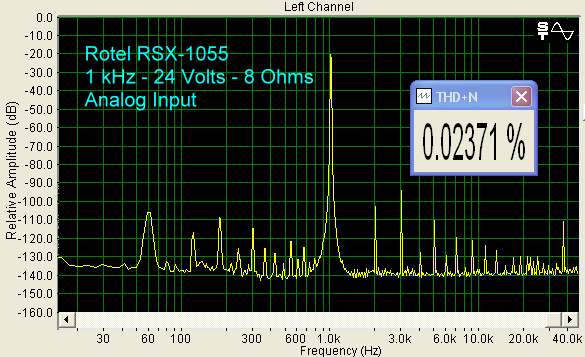
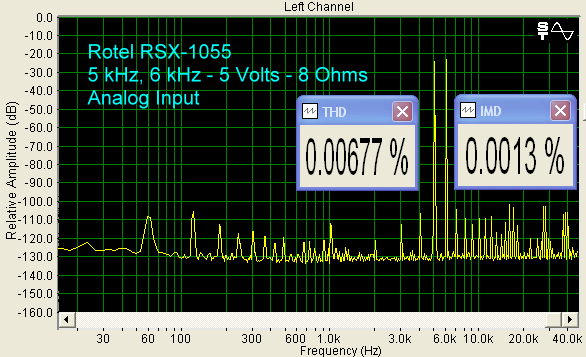
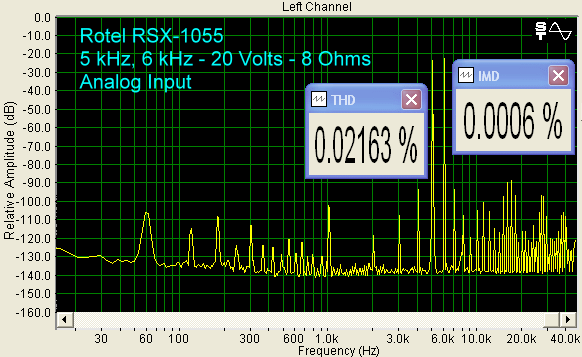
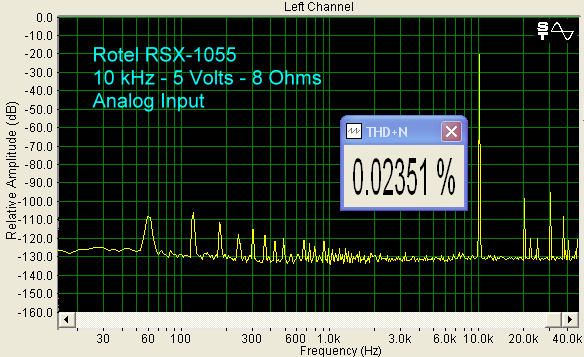
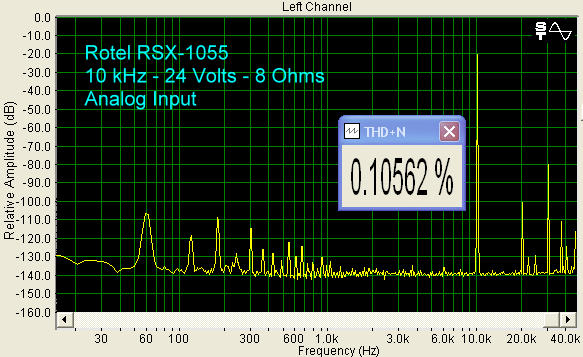
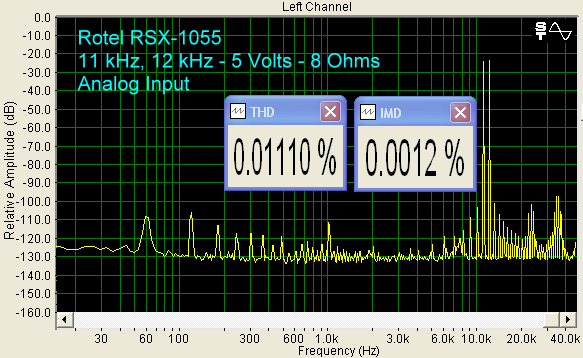
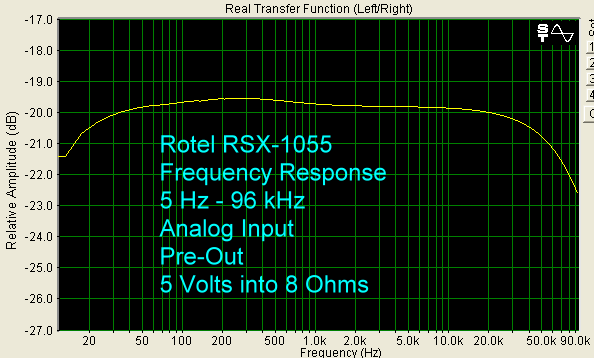
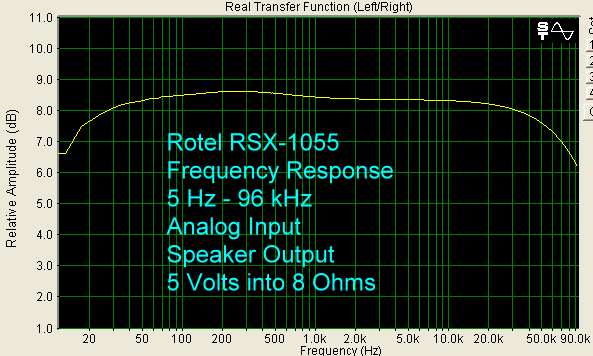
The measured frequency response through the pre-out as well as the speaker out were almost identical. It rolls off above 20 kHz and below 40 Hz. If there are coupling capacitors at the input, they should be made larger to give a flatter low end response. The 0.25 dB bump at 300 Hz is something I have seen before in units that have tone controls as part of the circuit. (They were set at 0 in the 1055 for the tests.)
Conclusions
All in all, the Rotel RSX-1055 is a very good product. It has forgone marketing department over-specifications in favor of good sound with more reasonable expectations of power output. It is more attractive than most receivers, looking like a multi-kilobuck unit rather than the kilobuck unit that it actually is. It is loaded with the latest decoding modes, plenty of DSP choices, can handle several rooms, and the remote control is actually easy to see in the dark. If you have not considered Rotel in the past, I urge you to do so now, as they are moving forward from the conventional and routine, and have evolved into the unusual.



 YouTube
 Facebook
 Twitter
 LinkedIn
 Pinterest
 Google+
 Instagram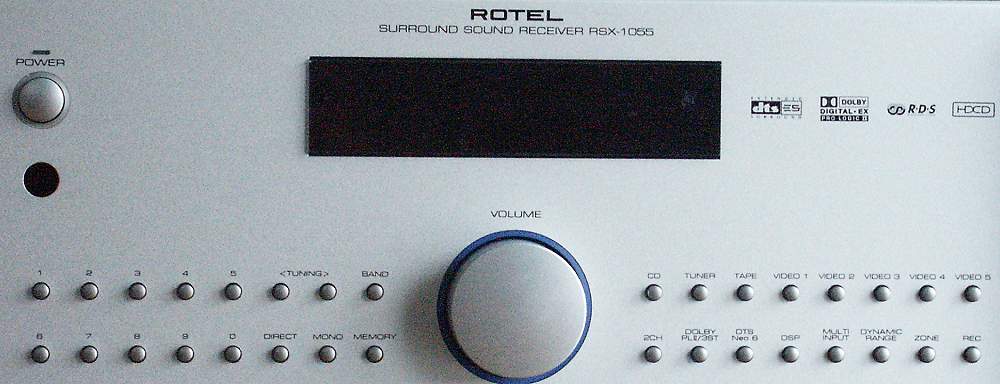
Magazine Publishing Solutions by
 Advontemedia