 YouTube
 Facebook
 Twitter
 LinkedIn
 Pinterest
 Instagram


Introduction
Emotiva has been recognized as a value/performance leader in amplifiers for quite some time. Now, they venture into the speaker arena with several models. In this review, we cover the new ERT-8.3 Towers, ERM-6.3 Monitor (used as the center channel), and ERD-1 Surrounds. I enjoyed these speakers about as much as any I have ever had in my system. They are well-designed and solidly constructed. They represent an excellent value as well.
This five-channel surround sound system retails for $2,496 at Emotiva. This system is based on the ERT-8.3 towers, which serve up a smooth yet powerful performance as a stereo pair. The supporting cast for surround sound purposes includes the ERM-6.3 monitor for the center channel and a pair of the ERD-1 surrounds. They all offer solid construction, utilitarian styling, high output capabilities, and extended frequency response.
Specifications
- ERT-8.3
- Design: Three-way, Sealed Enclosure
- Drivers: One 1″ Cloth Dome Tweeter, Two 5.25″ Midrange, Two 8″ Woofers
- Sensitivity: 89 dB (2.83volts @ 1 Meter)
- Recommended Amplifier Power: 50-500 Watts RMS
- MFR: 45 Hz – 20 kHz ± 2 dB
- Nominal Impedance: 4 Ohms
- Selectable switches:. Tweeter Level, Tweeter Extension, Midrange Level, and Boundary Compensation
- Dimensions: 43.75″ H x 10″ W x 13.25″ D
- Weight: 75 Pounds/each
- MSRP: $799/each USA
- ERM-6.3 (Used as Center Channel)
- Design: Three-way, Sealed Enclosure
- Drivers: One 1″ Cloth Dome Tweeter, Two 4″ Midrange, Two 6.5″ Woofers
- Sensitivity: 89 dB (2.83volts @ 1 Meter)
- Recommended Amplifier Power: 50-350 Watts RMS
- MFR: 80 hz – 20 kHz ± 2 dB
- Nominal Impedance: 4 Ohms
- Selectable switches:. Tweeter Level, Tweeter Extension, Midrange Level, and Boundary Compensation
- Dimensions: 26″ H x 8.5″ W x 9.5″ D
- Weight: 38 Pounds/each
- MSRP: $599/each USA
- ERD-1 Surrounds
- Design: Two-way, Sealed Enclosure
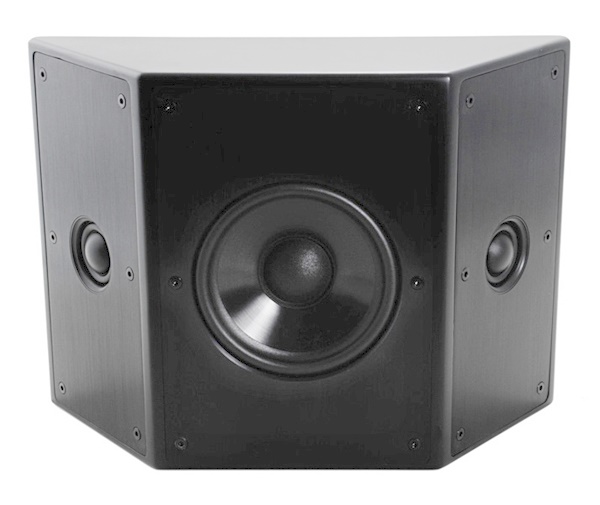
- Drivers: Two 1″ Cloth Dome Tweeters, One 5.25″ Woofer
- Sensitivity: 89 dB (2.83volts @ 1 Meter)
- Recommended Amplifier Power: 50-200 Watts RMS
- MFR: 80 Hz – 20 kHz ± 2 dB
- Nominal Impedance: 4 Ohms
- Four possible switch postions: Left/Right Bipole, Left Dipole, Right Dipole and Left/Right Inverted Dipole
- Dimensions: 9.5″ H x 13″ W x 4.25″ D
- Weight: 11 Pounds/each
- MSRP: $299/pair USA
- Emotiva
Â
Â
Â
Â
Â
Â
Â
Â
Â
Â
Â
Â
Â
Â
Design
The Emotiva five-speaker system consisted of a pair of the Emotiva ERT-8.3 tower speakers for the main channels, one Emotiva ERM-6.3 monitor for the center channel and a pair of the Emotiva ERD-1’s for the surrounds. I used my Hsu Research subs for multi-channel music and movies. For these sessions, I crossed over the speakers at 60 Hz for the mains, 80 Hz for the center channel and 100 Hz for the surrounds. I also auditioned the ERT-8.3’s as a stereo pair, running them full-range.
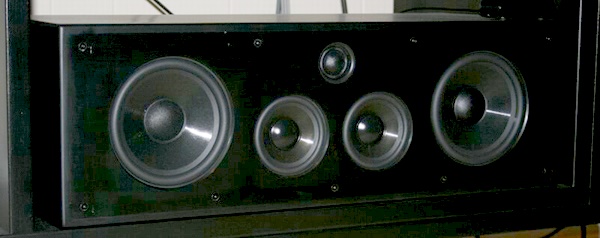
The speakers all share 1†silk dome tweeters while the other drivers have tri-fiber composite cones that appeared to be very rigid. In the case of the ERT-8.3 towers, there is one tweeter and 2~5.25†midrange drivers in a nested array. The ERT-8.3’s also sport 2~8†woofers in a sealed, isolated chamber. These towers are big, heavy and stately in appearance. In my room, the bass response matched the mid range response down to about 45 Hz where it rolled off by 7 dB to a plateau that was essentially flat to about 20 Hz at which point they rolled off rapidly.
It is obvious that a lot of effort went into the design of these speakers. The crossover network features phase compensation and coils that Emotiva claims will preserve as much of your amp’s damping factor as possible. The speakers also include several touches that one would normally expect only in high-end products, but are unexpected at the Emotivas’ decidedly pedestrian prices. Two examples of this include cast aluminum speaker baskets and magnetic grilles.
These speakers were designed in consultation with Vance Dickason who is a well-respected loudspeaker design professional. I could write page after page on the topic of the speakers’ design and technological innovations. Instead, I will tell you that there is a wealth of information regarding these speakers that you can read on the Emotiva website. I suggest that anybody interested in exploring the design and technology of these speakers should visit their site and read all there is to read.
The Emotiva speakers are rated at 4 ohms nominal impedance. I was concerned that my surround sound receiver may have trouble delivering enough current to do real justice to the Emotivas. So the good folks from Emotiva were kind enough to send along one of their XPA-5 5-channel amps. This 80-pound beast of an amp retails for $799. It is stable into 4-ohm loads and into this load; it is actually rated at a very robust 440 watts per channel with all channels driven at 1 kHz and 0.04% THD. There is a lot of value in this well made product and this amp provided a smooth, powerful and seductive presentation throughout the audition.
Getting back to the ERT-8.3 speakers, I must say that they have a decidedly utilitarian look and imbue their status as purpose-built transducers by their very heft and solidity. That is not to say that they aren’t handsome, just that they aren’t likely to win any awards for their artistic styling. Their finish is ideal for a darkened theater, by the way. Their sealed cabinets are constructed of ¾†MDF on all sides except for the front baffle which is 1†MDF. The baffles also have 6 mm brushed aluminum fasciae. The cabinets are internally braced, finished in a satin epoxy coating and emit a seriously damped thud when subjected to the old knuckle-rap test. The towers also come with four coned feat and aluminum “outriggers†so you don’t need to invest in stands. The cones are not pointed, but they have felt-covered discs. They are good for any type of floor, really.
Setup
I set up the speakers where the main speakers and my head occupied the vertices of and equilateral triangle that was roughly 12′ on a side. The main speakers were toed-in to aim directly at my listening position. The nested array of mids/tweeters on the ERT-8.3’s are designed so that the tweeter would normally be near the outer edge of the cabinet. I wound up switching the left and right speakers so the tweeter was on the inside. This filled-in the soundstage and provided better imaging since the diffraction effects were now minimized for my particular set-up.
All the Emotiva speakers have a series of toggle switches near the inputs. I left everything on “flatâ€, boundary compensation off (except for the center speaker which sat in a cabinet below my screen) and extension set to high. For the surrounds, I ran them in bipolar mode the whole time. The toggles on the ERD-1 surround speakers allow the user to operate the speakers as bipoles or dipoles as well as providing the ability to tweak the phasing. Very nice.

In Use
Let me just get one thing out of the way at the very beginning – these speakers ROCK. I thought I’d go ahead and mention up front that so hopefully nobody would have too much difficulty figuring out how I feel on the subject of the Emotiva speakers.
I started my critical listening with the Elton at 60 Blu-Ray in 5.1 PCM. On “Levon”, Elton’s piano was uncannily natural sounding and the drum kit came through with excellent slam. His voice had great clarity and tumbrel accuracy. On Honky Cat, the bass line had good pitch definition with strong output in the power band. The piano sailed here, too. I could hear every note of each instrument on “Rocket Man”. That was a consistent theme with these speakers – they handle complex passages about as well as any speakers that I have spent time with. The Emotiva speakers were subjectively very low in distortion which was certainly a good thing. They did not, however, flesh out the venue space very well as the mix came through a little too up-front.

The DTS HD Master track on the Blu-Ray of Master and Commander, The Far Side of the World, was presented with a slight prominence in the upper mids. The sound was nicely balanced throughout the rest of the audible band. Whenever the soundtrack heated up, the Emotivas really hung in there, bolstered by the powerful and refined XPA-5 amplifier. I noted excellent voice intelligibility and good height on the below-decks sound effects with awesome image specificity. There was a full palette of sound shadings in the storm scene. The sound was luscious and delectable on this selection.

I recorded Make it Funky from Palladia and skipped through to all the live music performances. This New Orleans music documentary generally sounded excellent through the Emotivas, despite being encoded in old-fashioned Dolby Digital. I thoroughly enjoyed the realistic presence of the drum kit on “Fire on the Bayouâ€. On “Bare Footin’â€, the Emotivas had great drive and rhythm and I could hear each individual instrument in the horn section. Snooks’ guitar sounded amazingly real on “Let the Good Times Rollâ€. The Emotivas revealed all of Keith Richards’ years of cigs, booze (and who knows what else?) when I heard his gritty voice and his gritty guitar on “I’m Readyâ€.
Next, I sampled Wanted from my Netflix queue. This film is an interesting and entertaining diversion that is ultimately a very shallow piece. The opening scene on the Blu-Ray disc was highly synthesized and this quality was fully exposed by the Emotivas. Again, I noted weighty and satisfying mid-bass drive. The treble was nicely refined throughout the film. The train wreck scene came through with an amazing full-range impact. I personally have never witnessed a crash like this in real life. I’m not sure if there really ever has been a crash like this. But I must say that I have never experienced a more convincing representation of a fantastical scene in a theater or at home. Amazing. Lastly, the speech intelligibility was marginal in certain scenes, but that could have been due to the highly processed mix.

Then I tried the ERT-8.3’s in stereo mode running full range and without my subwoofers engaged. The Thelonious Monk SACD of Straight, No Chaser is an excellent test of a system’s ability to reproduce the sound of a small, intimate jazz ensemble. It allows the listener to ascertain the system’s verisimilitude regarding the reproduction of the various jazz instruments. I heard a slight prominence in the mid highs. This was slightly more apparent on music than with movies. That’s about the most negative thing I have to say about the ERT-8.3’s.
The sound was otherwise well-knit with lots of space and air around the instruments. The title track lit up the room and there was nice bounce in the bass that got my feet tapping. The treble was very clean and extended and the sound of the cymbals benefited greatly on this point. The dynamics of the piano came through wholly unscathed. The image of the piano was several feet behind the plane of the speakers. The soundstage was very wide, but did not have the height I remember getting with my Vandersteen Model 2Ci’s. I heard excellent attack on the snare and the tom toms. I must say that I really I preferred the sound of the ERT-8.3’s without the subs when enjoying music and the midrange of the ERT-8.3’s really shone on this T. Monk SACD.
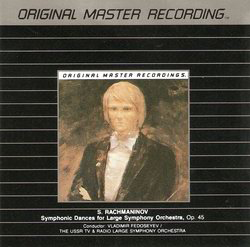
I wanted to put these speakers through their paces on some large scale orchestral works and I can’t think of much better source material that the MFSL CD of S. Rachmaninov’s Symphonic Dances for Large Orchestra, Op. 45 as performed by the USSR TV & Radio Large Symphony Orchestra. On Andante Con Moto, I heard a wide spacing of the instruments. There was good image height on this particular movement. The transients of the tympani were very well reproduced through the ERT-8.3’s. On “Lento Assai Allegro Vivaci”, I was plastered to my listening chair throughout all the fortissimo passages. The ERT-8.3’s could play cleanly at 105db or more. That’s quite an accomplishment in my large room. But what was even more satisfying is that they could achieve these prodigious sound pressure levels without smearing or muddying the sound in any appreciable amount while the bass extension of these speakers heightened the perception of the performance space. There were great dynamic shadings etched on a very silent background. I couldn’t find much to criticize in response to the ERT-8.3’s captivating performance.
So these Emotiva speakers proved to be very revealing, but they were not clinical or dry sounding. To the contrary, they were warm and inviting. They were at times a little prominent in the upper mids but I never engaged THX re-eq as I often do with my reference Definitive Technology speakers. The Emotivas were also a little forward in the power band. For the first time ever, I felt that my room would benefit from bass traps due to the massive bass drive coming from the ERT-8.3’s. All in all, however, these were some of the best speakers I have heard for anywhere near their modest price.
I owned a pair of Vandersteen Model 2Ci’s for many years. In a direct comparison between the Emotiva ERT-8.3’s and the Vandersteens, the Emotivas had similar bass extension, but there was the prominence in the upper bass with the Emotivas. The Vandersteens’ highs sparkled more and they had an incredible soundstage height. But the Emotivas had an even more seductive presentation overall. The Emotivas and Vandersteens are about the same price. If you have an amp that is up to the task, then I would certainly recommend the Emotivas over the Vandersteens. The Emotivas’ balance of strengths makes that an easy recommendation for me and I was very sad to see the Emotiva’s go at the end of the review period.
On the Bench
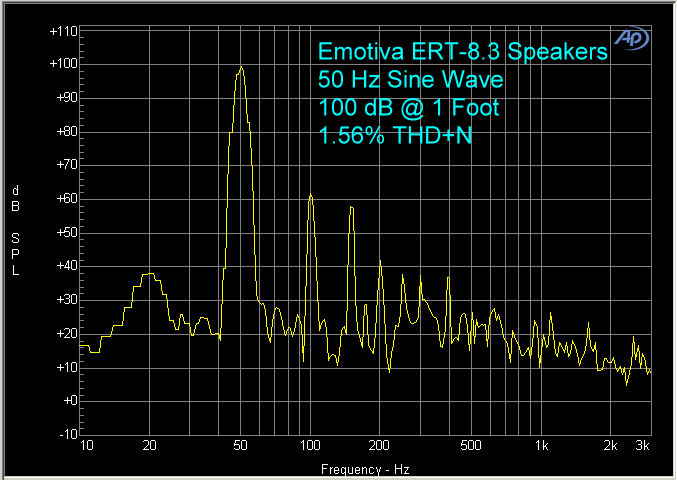
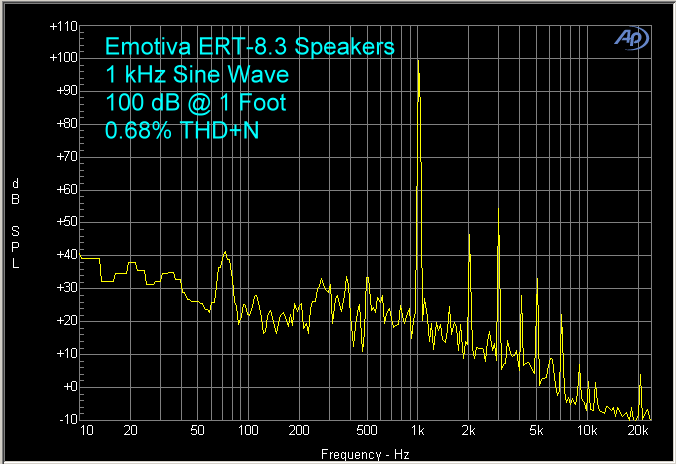
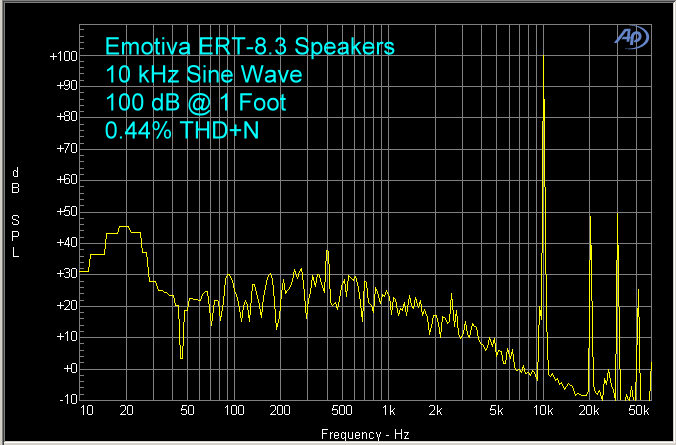
I only bench tested the ERT-8.3. Distortion measurements were made within an 80 kHz bandwidth and 1 foot from the respective driver. On the rear panel of the speaker, I set the tweeter to High Extension and Level + 2, the Midrange Level was set at 0, and Boundary Compensation was set to On. These settings gave the flattest response. (See Page 3 for a photo of the rear panel switches.)
Measuring from the lower woofer, at 50 Hz, THD+N was 1.56%.
At 1 kHz, measuring from the lower midrange driver, distortion was 0.68%.
And from the tweeter, at 10 kHz, THD+N was 0.44%. These distortion values represent very good performance.
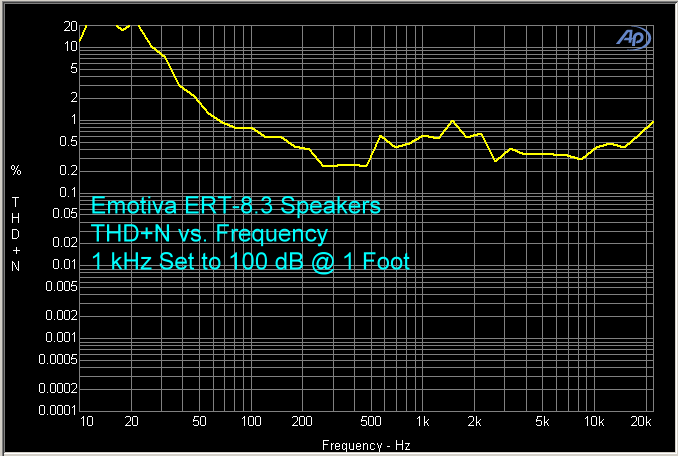
A graph of THD+N vs. Frequency is shown below. The measurement was taken at 1 foot from the middle of the speaker array. Distortion declines from 10% to 1% between 26 Hz and 65 Hz, and then stays below 1% for the remaining audible band. Again, very nice performance.
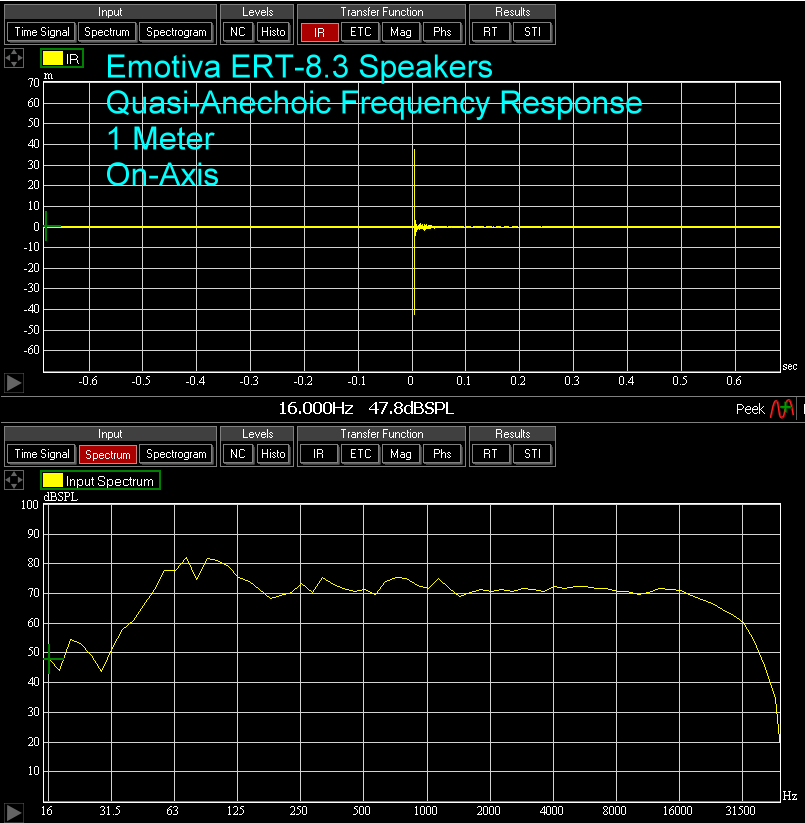
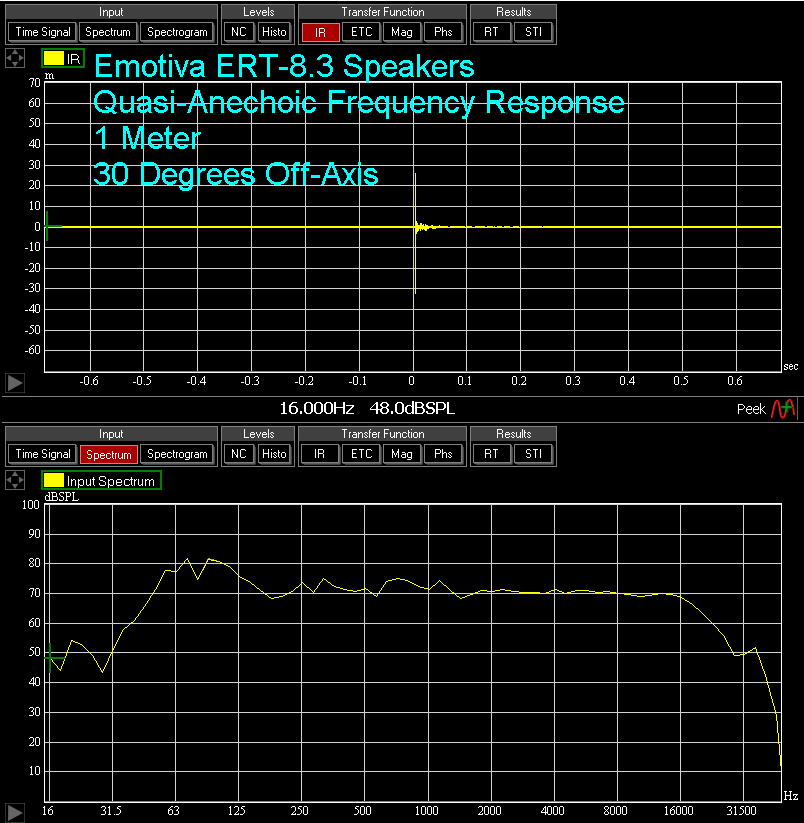
Quasi-anechoic frequency response measurements are shown below. The first graph was taken on-axis, and the second at 300 off-axis. The response is reasonably flat from 125 Hz to 20 kHz. There is a hump between 60 Hz and 125 Hz which can easily be flattened with any of the new receivers that have room correction such as Audyssey. Off-axis, the response above 2 kHz begins to roll off slightly, and especially above 16 kHz. Note that the software I am using for these tests is still in its first version, and there is no provision for a microphone compensation file. My calibrated microphone (Earthworks) rolls off 3 dB between 20 kHz and 30 kHz, so the yellow graph line would actually intersect the vertical 31.5 kHz line at a point 3 dB higher than shown in the graphs.
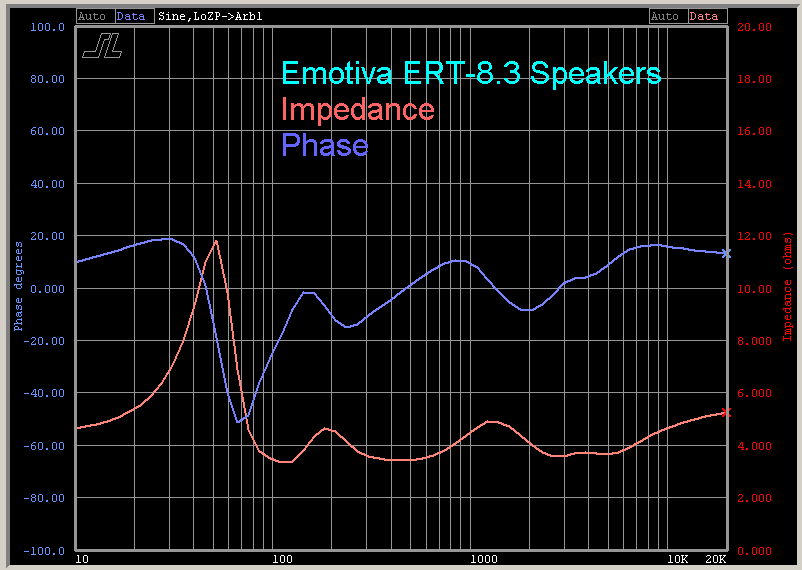
The impdance stays very close to 4 ohms except at 50 Hz. The phase stays within + 200 and – 600, and for most of the audible band, it is within ± 200, so in spite of being a 4 ohm speaker, they should be relatively easy loads for most receivers.
Conclusions
The Emotiva ERT-8.3 speaker system comes dressed in basic black. Each piece of the ensemble is solidly constructed. I consider their styling to be appealing and it represents a strong industrial statement. What they really have going for them is fantastic sound quality at an extremely attractive price point. They also played loudly and handled complex passages without strain. If you decide to purchase a set, be prepared to enjoy a warm, relaxed overall presentation with highs that are smooth, sweet and extended even if they are a little reticent at times. All in all, these speakers are a strong recommendation.