 YouTube
 Facebook
 X
X LinkedIn
 Pinterest
 Instagram

Introduction
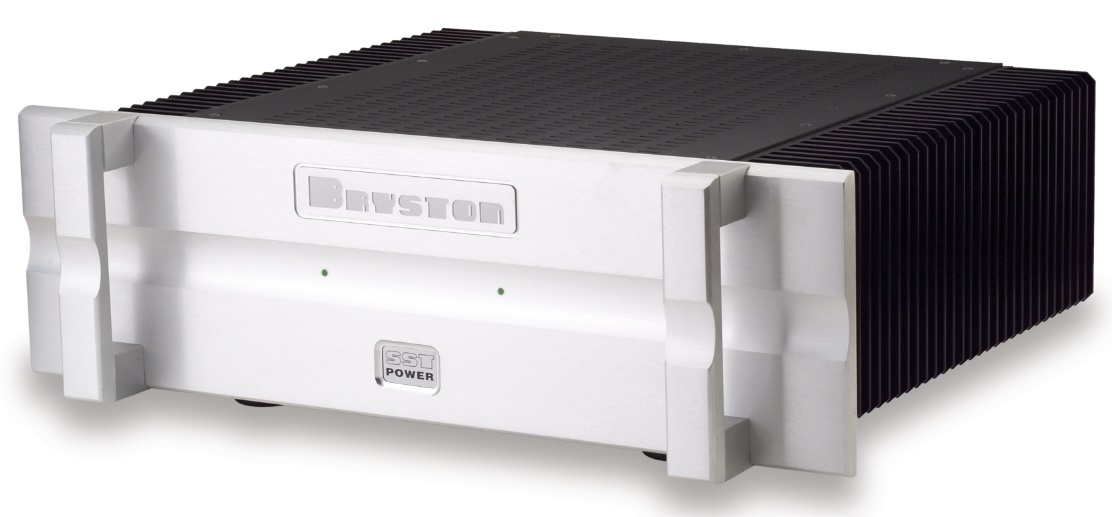
We were so impressed with the performance of the Bryston 14B SST2 stereo power amplifier, we decided to take a look at their smaller power amplifier, the 3B SST2, which delivers 150 watts rms x 2 into 8 ohms.
At 40 pounds, but just 150 watts x 2 output, I still had to lug this thing carefully into the lab. Carefully because of my shoulder rotator cuff, not because of the amp. This amplifier is built – like all Bryston amplifiers – to give UPS truck drivers terrific muscle definition. And, as it turns out, the amplifier delivers its own brand of definition . . . mighty fine, I might add.
Specifications
- Design: Solid State Stereo Power Amplifier; Class AB
- Power: 150 Watts RMS x 2 into 8 Ohms, 250 Watts RMS into 4 Ohms, 400 Watts RMS Bridged
- MFR: 1 Hz – 100 kHz
- THD+N: 0.007%
- S/N: 110 dB
- Input Sensitivity: 2.3 Volts
- Inputs: Balanced XLR and Unbalanced RCA
- Dimensions: 5.25″ H x 19″ W x 12.5″ D
- Weight: 40 Pounds
- MSRP: $3,850 USA
- Bryston
Design
The 3B is a solid state Class AB push-pull amplifier with four gain stages. Although it has balanced inputs, the gain stages are single-ended, unlike the 14B, which is fully balanced.
The amplifier has a modular design, with each amplifier having its own power supply transformer and 30,000 µF of power supply capacitance. It comes in two sizes, one for rack mounting, and the other to sit in a prominent position where your friends can admire it suitably. The brushed aluminum front panel is among the most beautiful out there in amplifier land.
Two tiny LEDs on the front panel belie the raw power that they state has been turned on and ready for use.
The rear panel has XLR and RCA input jacks, with switches to select which one you want to use, a gain switch to adjust the sensitivity in case your preamplifier has such a high output that you are only turning the volume control a few notches to get the volume you like. The five-way speaker binding posts are sturdy. The AC power cord is detachable for those of you who like shinier varieties of connections to the wall outlet.
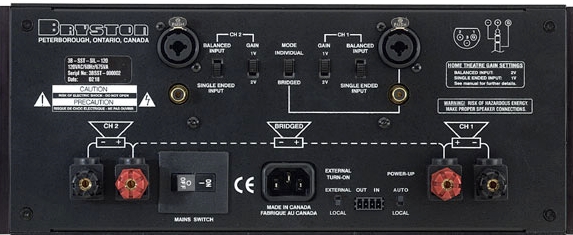
The main power on/off switch is also on the rear. The front panel Bryston logo is the standby/on button. Depress it, and the LEDs turn bright green.
In Use
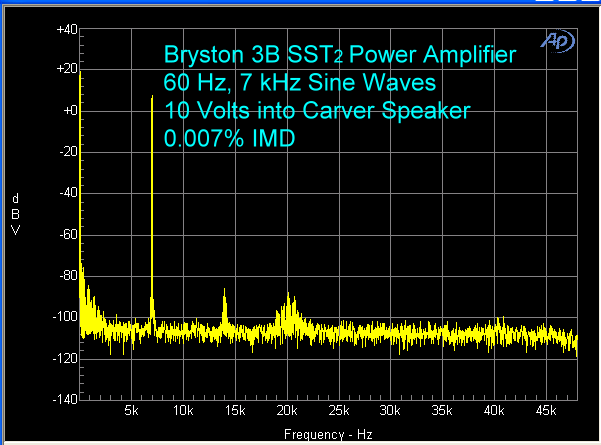
I listened to many of the same albums that I listened to when I reviewed the Bryston 14B SST2, and, well, they sounded just like they did with the 14B, namely neutral. As you will see in the bench tests, there is a bit more IMD with the 3B, but it is still so low, that it is inaudible. This is an amplifier that delivers all the detail, without a hint of harshness. Nice deep soundstage. Lots of great music.
I combined the Bryston with an OPPO BDP-83/NuForce Edition universal player, Mystère ca21 preamplifier, and Carver Mark IV ribbon speakers. Except for the jazz albums where I played along with the music, as noted below, I moved my drums to the rear wall.
Of course, I could not get the incredibly high volume that I could with the 14B, but the 3B is designed for smaller, well, venues we might say, such as a den, where you are not trying to impress your friends with shattering windows, but, rather, being soothed by classical chamber music or some easy listening jazz, and a glass of wine. Of course, if you want to listen to heavy metal, go ahead, see if I care. The 3B has headroom, just don’t expect it to kill all the cockroaches.
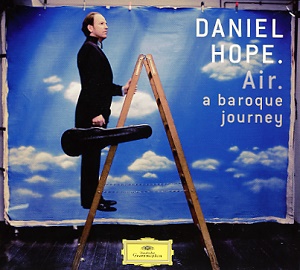
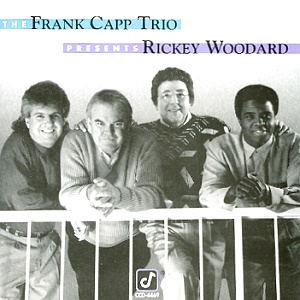
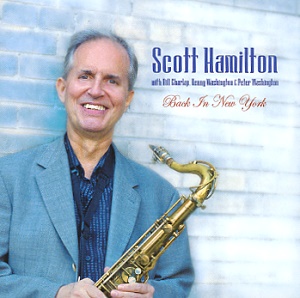
Here are some additional albums that I listened to, as I just purchased them, and they are terrific. One is Baroque music, but the other two are classic jazz albums that I highly recommend. I had to search high and low to find the Frank Capp album in particular.
The first one is a compilation from various composers, with Daniel Hope as violin soloist. Violins are great instruments to test amplifiers with, and Danny boy’s violin sounded as smooth as silk on the 3B.
This is the album I had trouble locating. It’s a Concord Records 1991 release. There is one strange thing though. Look at the title and then count the number of musicians on the cover art. Regardless, this is some marvelous jazz with a terrific alto and tenor saxophonist, Rickey Woodard, and actually, it’s the trio with Woodard as guest soloist. As I have mentioned before, my favorite combination is a tube preamplifier with a solid state power amplifier, as I have done in this review, and – well, you just have to listen to a combination like this to hear what I mean. It really is wonderful. The preamplifier tube harmonics combined with the Bryston’s absolute neutrality was a thing to behold.
Here’s another great sax player, Scott Hamilton, on Concord Jazz, but this CD was a little easier to find, as it was recorded in 2005. Same setup as the Frank Capp album, with piano, bass, drums, and sax. This kind of music is great to play along with on my drums, and the Bryston made it sound like I was a guest drummer on the play date (yeah, like I wish). The 3B’s quiet background and ultra-low distortion made for some wonderful jazz evenings, with only the lights behind the speakers turned on, dimmed to about half brightness, and me in my easy chair, eyes closed, blood pressure dropping, sipping something cold and refreshing. I forgot about the sound system and just let my eardrums communicate with what’s left of my 65 year old cerebral cortex. You know, I think spending lots of evenings listening to satisfying music on a good system may very well lengthen the lifespan. Good excuse to buy the best stuff, huh?
On the Bench
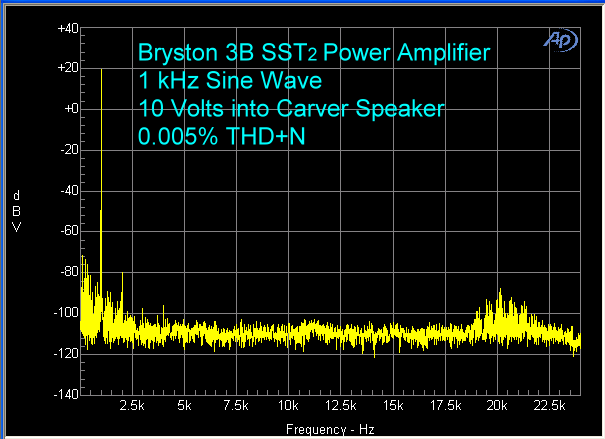
Distortion measurements were made within an 80 kHz bandwidth and into a Carver Mark IV ribbon speaker. Power output and distortion vs. frequency were made using 8 or 4 ohm power resistors.
At 1 kHz, THD+N was very low, just like the 14B. Totally within specification. The distortion was primarily 2nd order, and that is something I love to see in distortion spectra. The peaks in the 18 kHz – 21 kHz range are electrical noise in my AC lines. They are not a product of the amplifier and are below audibility. However, they do make an interesting variable to take note of in terms of noise rejection. It shows up in the 3B, but in the 14B, which is fully balanced throughout, the peaks did not show up, because of common mode rejection, which is one of the principal advantages of a balanced circuit.
Using 19 kHz and 20 kHz sine waves as the input signal, the B-A peak at 1 kHz was 96 dB below the fundamentals.
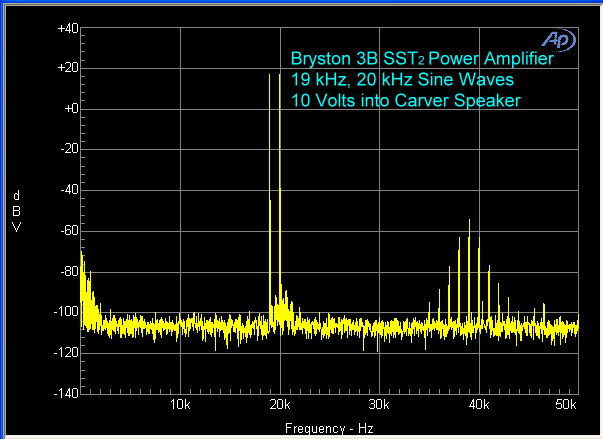
IMD measured only 0.007%. Man, that is low ! ! !
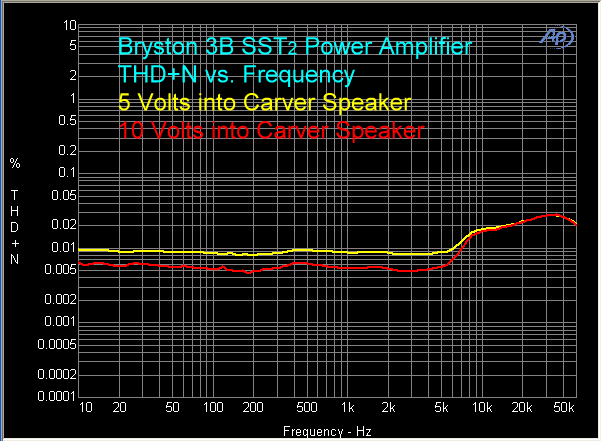
THD+N vs. Frequency showed a flat distortion spectrum out to 5 kHz, then rising to 0.02% – 0.03% from 10 kHz to 50 kHz.
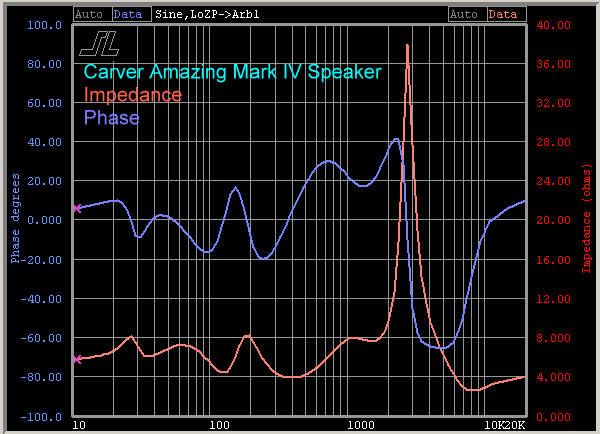
Here is an impedance plot of the Carver speaker that I used as the load.
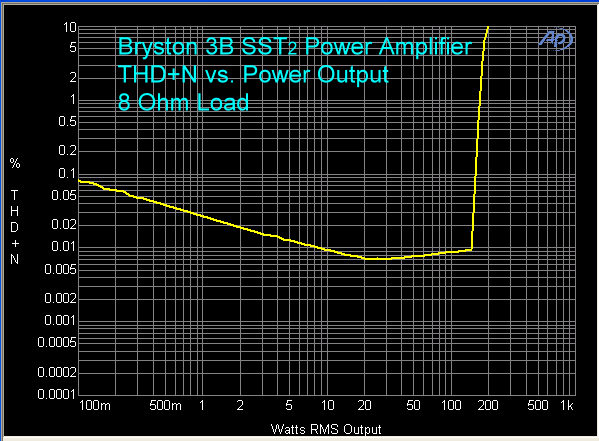
Power output at 8 Ohms was 150 watts at the sharp knee, and clipped (1% THD+N) at 170 watts output.
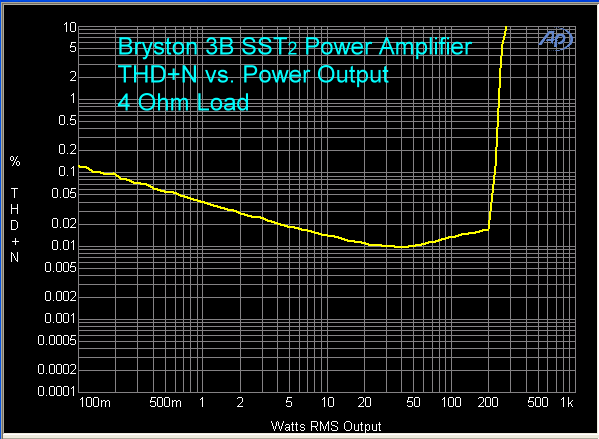
At 4 Ohms, the sharp knee was at 200 watts, and clipping occurred at 250 watts.
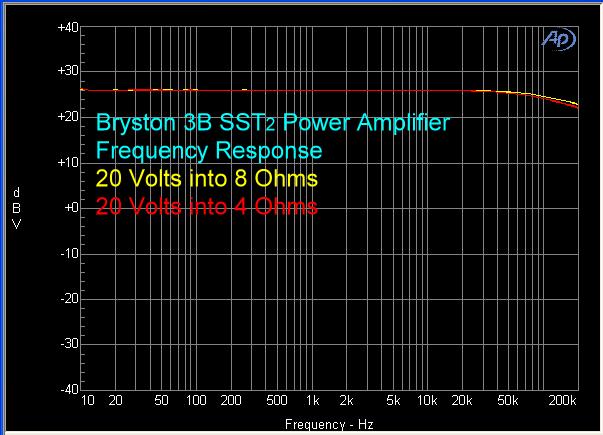
The measured frequency response was 10 Hz – 100 kHz, – 3 dB at 8 Ohms, and – 5 dB at 4 Ohms.
Conclusions
The Bryston 3B SST2 is a fine amplifier. Its neutral sound tonality allows for unfettered listening, so you can focus on the music and not be distracted with any coloration produced by the amplifier. There are lots of 150 watt per channel power amplifiers out there, but Bryston’s claim to fame is its vanishingly low distortion. If you are searching for an amplifier that delivers what the source sends to it and pretty much nothing else, your search is over.